2026 How to Choose the Best 3s Lipo Battery for Your Drone or RC Vehicle?
When selecting the best 3s Lipo battery for your drone or RC vehicle, expertise is invaluable. Industry expert Dr. Emily Waters, a renowned battery engineer, notes, "A quality 3s Lipo battery can significantly enhance your performance and flight time." As technology advances, making informed choices has become crucial.
3s Lipo batteries are popular for their balance of power, weight, and size. They offer excellent discharge rates, which are essential for high-performance drones and RC vehicles. However, choosing the right battery can be daunting. It's important to consider factors like capacity, discharge ratings, and the specific needs of your craft.
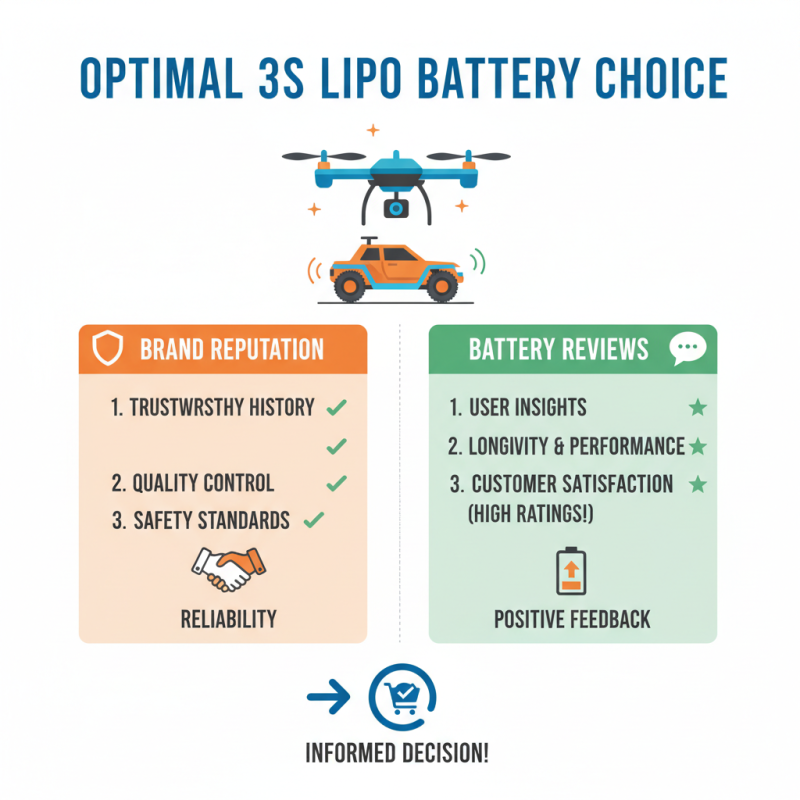
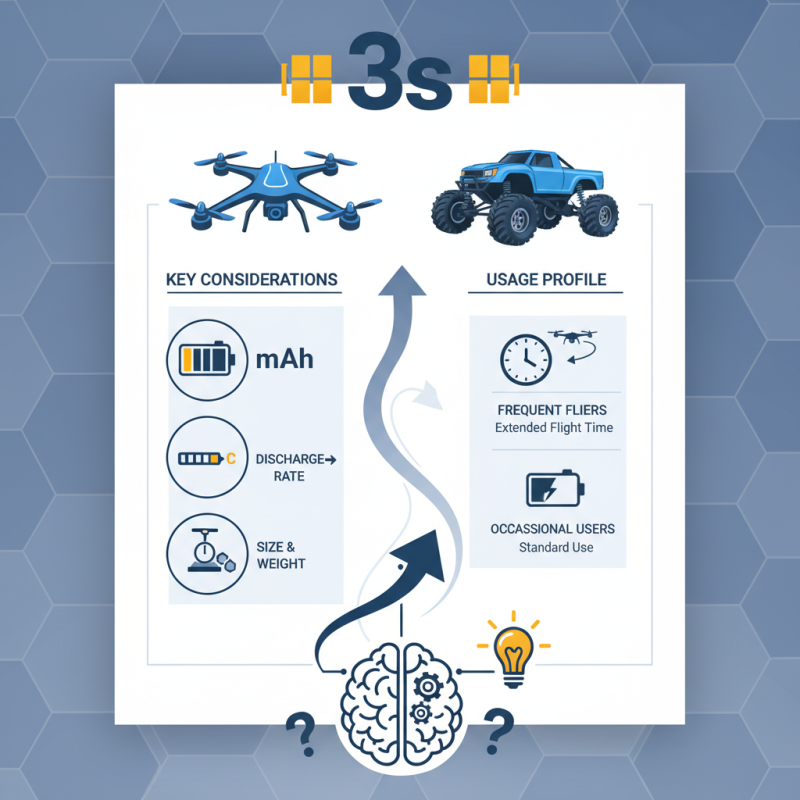
Many enthusiasts focus solely on brands, sometimes overlooking critical specs. Consider your usage patterns. Frequent fliers may require higher capacity batteries for extended flight times, while occasional users can opt for basic models. Not every battery suits every application. Reflecting on these variables will lead you to the best choice tailored for your needs.
Understanding the Basics of 3S LiPo Batteries for Drones and RC Vehicles
When selecting a 3S LiPo battery for drones or RC vehicles, understanding the basics is essential. A 3S battery consists of three cells connected in series, providing a nominal voltage of 11.1V. This voltage is crucial for powering most models effectively. Pay attention to the battery’s capacity, typically measured in milliamp hours (mAh). A higher capacity means longer flight times or run times, but also can add weight.
Finding quality batteries is key. Look for reliable specifications, such as discharge rates. The C-rating indicates how quickly a battery can be discharged safely. For high-performance drones, aim for a minimum of 30C. Remember, power needs vary. Test different batteries to see which suits your flying style or racing preferences best.
Tip: Ensure proper care of your LiPo battery. Store it in a cool, dry place. Use a balance charger to maintain cell health. An unbalanced battery can lead to performance issues.
While a 3S battery provides excellent power, it's critical to monitor its health. Signs of wear include swelling or unusual heat during charging. Never ignore these signs; they can lead to dangerous situations. Consistent monitoring ensures safety and performance in your RC vehicle.
2026 3S LiPo Battery Capacities for Drones and RC Vehicles
This bar chart illustrates the different capacities available for 3S LiPo batteries typically used in drones and RC vehicles. Selecting the right capacity is essential for maximizing performance and flight time.
Key Factors to Consider When Choosing a 3S LiPo Battery
Choosing the right 3S LiPo battery for your drone or RC vehicle is crucial. There are many factors to consider. Capacity is one of the most important. It impacts flight time and performance. A higher capacity means longer usage. But, larger batteries also add weight. Balance is key.
Another factor is the discharge rate. It determines how quickly the battery can supply power. A battery with a high C-rating is essential for high-performance applications. This ensures the required power is available during intense use. However, such batteries are often heavier.
Voltage is also vital. A 3S battery typically has three cells, providing 11.1V. Make sure your vehicle can handle this. Over-volting can lead to damage, or worse, a fire. Always check compatibility. Make educated choices. Using the right battery improves the overall experience. Be cautious, and do thorough research before purchasing.
2026 How to Choose the Best 3s Lipo Battery for Your Drone or RC Vehicle? - Key Factors to Consider When Choosing a 3S LiPo Battery
| Battery Capacity (mAh) |
Discharge Rate (C) |
Weight (g) |
Size (mm) |
Voltage (V) |
| 1300 |
75 |
150 |
111 x 34 x 24 |
11.1 |
| 2200 |
40 |
230 |
138 x 46 x 24 |
11.1 |
| 3000 |
25 |
350 |
150 x 50 x 30 |
11.1 |
| 5000 |
20 |
650 |
166 x 50 x 30 |
11.1 |
Comparing Capacity, Voltage, and Discharge Rate in 3S LiPo Batteries
When choosing a 3S LiPo battery for your drone or RC vehicle, understanding capacity, voltage, and discharge rate is crucial. Capacity, measured in milliamp hours (mAh), indicates how long your battery can power your device. A higher capacity means longer flight times but adds weight. If you select a battery that is too heavy, your drone may struggle to gain altitude. This is something many hobbyists overlook.
Voltage is another key factor. A 3S battery has three cells, providing a nominal voltage of 11.1V. This is ideal for many drones and RC cars. However, not all models can handle that power. Ensuring compatibility with your equipment is essential. Using a higher voltage than your device expects can cause damage. Many have made this mistake, leading to costly repairs.
Lastly, the discharge rate, indicated by the C-rating, measures how quickly the battery can release energy. A higher C-rating allows for more power without overheating. But batteries with very high ratings might be more expensive. Balancing these factors can be challenging. You may find that the perfect battery doesn’t exist. Reflecting on your choices is vital for optimal performance.
Safety Tips for Using and Maintaining 3S LiPo Batteries in Your Models
When using 3S LiPo batteries, safety is paramount. A report from the National Fire Protection Association indicates that battery-related fires are increasingly common, particularly in drone and RC vehicle use. Users must practice safe charging techniques. Avoid overcharging, as this can lead to thermal runaway. Always monitor the voltage levels. LiPo batteries should not exceed their rated voltage, typically 11.1V for a 3S battery.
Storage is another critical aspect. Keep batteries in a cool, dry place. LiPo bags or fireproof containers can reduce the risk of fire. It's recommended to store them at a voltage of around 3.8V per cell for optimal longevity. Regularly inspect batteries for puffing or damage, as these symptoms indicate a need for immediate disposal. According to the Battery University, proper maintenance can extend the life of LiPo batteries by up to 40%.
While many users may overlook these details, neglecting proper care can lead to failure or accidents. Always adhere to manufacturer guidelines, as mentioned in several safety standards documents. Documenting usage patterns aids in recognizing when batteries may need replacing, ensuring a safer experience with your drone or RC vehicle.

 +86-13928815851
 CONTACT NUMBER
 CONTACT NUMBER