2026 How to Choose the Best 3s Lipo Battery for Your Needs?
Choosing the right 3s Lipo Battery for your needs can be a daunting task. With so many options available, understanding key features becomes essential. The 3s Lipo Battery is favored for its balance of voltage and power, making it ideal for various applications.
When selecting a 3s Lipo Battery, consider factors like capacity, discharge rate, and weight. Capacity influences run time, while discharge rate affects performance during heavy use. These details matter more than some enthusiasts realize. Many overlook the importance of brands and their reputations. It’s wise to research user reviews and expert recommendations.
Not all 3s Lipo Batteries perform equally. Variations can lead to frustration during use. This unpredictability highlights the need for thorough evaluation. Reflecting on your specific requirements will steer you toward the best choice. Ultimately, the right 3s Lipo Battery can enhance your experience in ways you might not have expected.
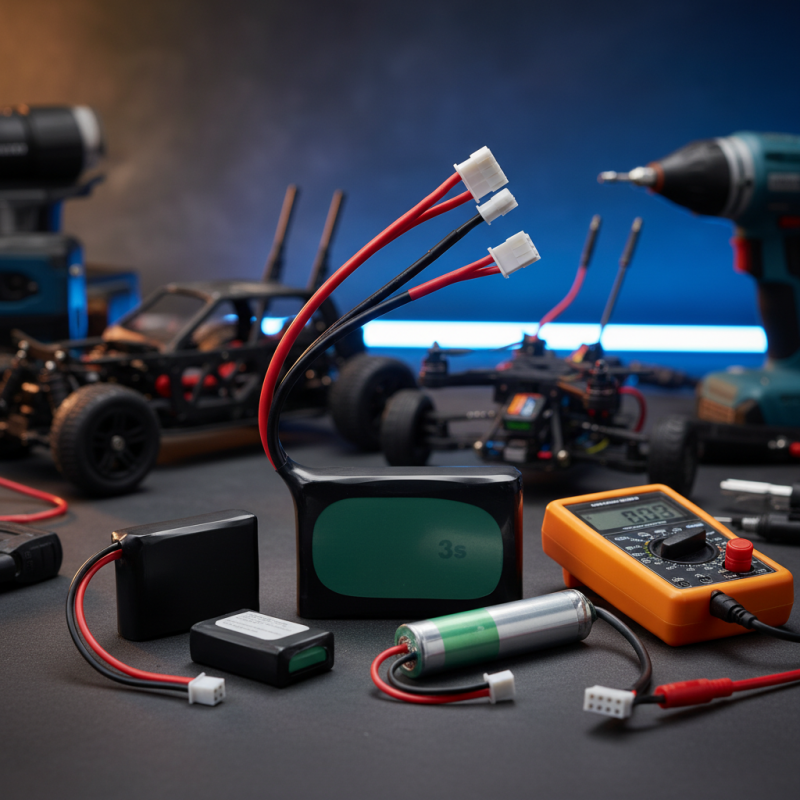
Understanding 3s Lipo Batteries: Key Specifications to Consider
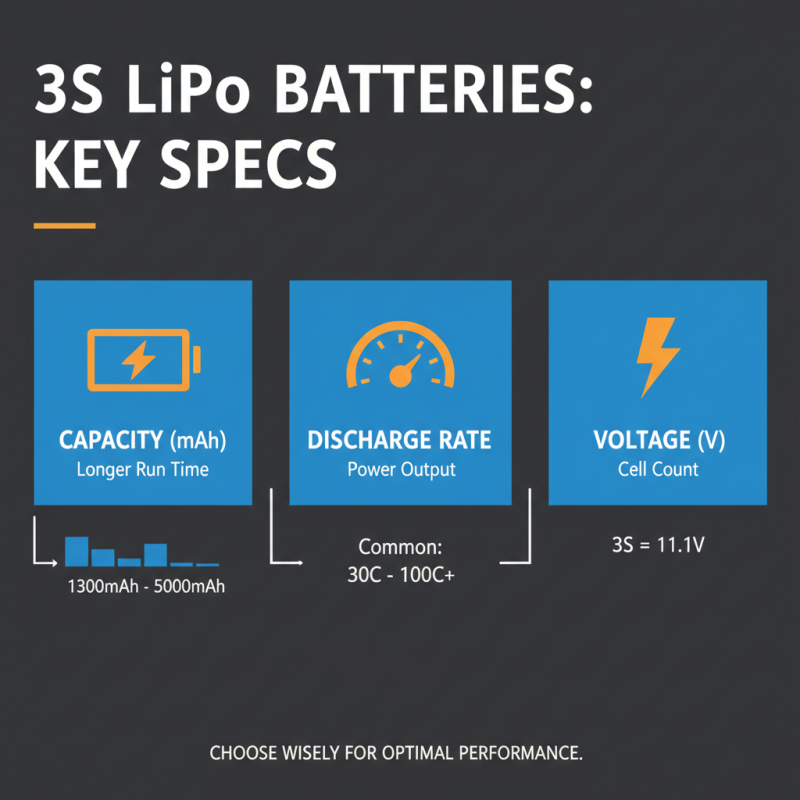
When selecting a 3s Lipo battery, key specifications determine its suitability for specific needs. One important specification is the capacity, measured in milliamp-hours (mAh). Higher capacity means longer run times. Industry data shows that the average 3s Lipo battery capacity ranges from 1300mAh to 5000mAh, giving users many options. Choosing the right capacity is essential. Selecting a battery that is too small may lead to inadequate performance.
Another crucial factor is the discharge rate, denoted as C-rating. This rating indicates how quickly the battery can safely deliver energy. A battery with a C-rating of 30 can deliver 30 times its capacity continuously. Poorly matched C-ratings may lead to overheating and shortened lifespan. It’s vital to ensure your battery’s discharge rate aligns with your device's requirements.
Weight and size also play significant roles, especially in RC models and drones. A heavy battery may affect performance negatively. Balancing the right specifications while considering the project type adds complexity. Many users overlook these details, thinking a higher capacity is always better. Awareness is key; understanding how each specification interacts can lead to more informed choices.
Assessing Your Power Needs: How to Determine Amp and Voltage Requirements
When selecting a 3s LiPo battery, it's crucial to assess your power needs. Start by determining the amp requirement of your device. The amp rating of your battery must match the demand of your setup. For instance, a typical RC car may require around 20-60 amps under load. Not meeting the amp needs can lead to performance issues or battery damage.
Voltage is equally important. A 3s LiPo battery has a nominal voltage of 11.1V, made up of three lithium cells. Devices vary in their operational voltage range. If your device specifies a requirement of 11.1V, a 3s battery fits perfectly. However, what if your application demands higher voltage? That’s a question worth exploring, as mismatched voltage can cause inefficiencies or failures.
Assessing your specific setup is vital. Look into your motor's specs and total power consumption. You may find insights in data reports from industry leaders. These reports often indicate trends on battery performance and capacity under various conditions. Remember, reliable battery performance hinges on matching your power needs correctly. If your calculations are off, it can lead to suboptimal performance or excess strain on your system. Always double-check the specifics.
Evaluating Battery Discharge Rates: C-Rating Explained
When considering a 3s LiPo battery, understanding the C-rating is crucial. The C-rating indicates the battery's discharge rate. A higher C-rating means the battery can deliver more power without overheating. For example, a 2200mAh battery with a 30C rating can theoretically deliver 66A of current (2200mAh x 30C). This is a significant factor for performance in applications like drones and RC vehicles.
High C-rated batteries often come with a premium price tag. It is essential to evaluate actual performance versus rated specifications. Many users report discrepancies between advertised and real-world output. Always check reviews and third-party test results to gauge reliability. Poor performance in critical moments can lead to crashes and loss of equipment.
Tips for selecting a LiPo battery: First, consider your equipment's power needs. Analyze the maximum current your setup requires. Second, avoid over-discharging your battery. Doing so can lead to reduced lifespan and battery failure. Lastly, invest in a good quality charger to maintain your battery's health. Battery performance is vital, but understanding your requirements is equally important.
Comparing Battery Brands: Which Manufacturers Offer the Best Options?
When considering a 3s Lipo battery, the choice of manufacturer plays a crucial role. Different brands vary widely in quality, performance, and reliability. Some manufacturers focus on high-capacity batteries, while others prioritize weight and size. The right choice depends on your specific application. For instance, racing applications demand lightweight and high-discharge batteries, while drones may require longer flight times.
It's helpful to compare battery specifications across brands. Look for cycle life, discharge rates, and internal resistance. These details impact performance and longevity. Reading user reviews can provide insights into real-world performance. However, always take reviews with caution, as experiences may vary.
Quality control is another vital aspect. Some brands excel in manufacturing consistency, while others might have reliability issues. If a battery consistently fails or doesn’t meet stated specifications, it can lead to performance problems. It's wise to choose a brand with a good track record in your specific field. Ultimately, research and awareness of manufacturer strengths can guide your decision and ensure you select a battery that meets your needs effectively.
2026 How to Choose the Best 3s Lipo Battery for Your Needs?
| Battery Capacity (mAh) |
Discharge Rate (C) |
Weight (g) |
Dimensions (mm) |
Voltage (V) |
| 2200 |
30 |
180 |
105 x 34 x 26 |
11.1 |
| 3000 |
25 |
250 |
150 x 50 x 30 |
11.1 |
| 4000 |
20 |
290 |
150 x 50 x 40 |
11.1 |
| 5000 |
15 |
320 |
155 x 50 x 40 |
11.1 |
Safety Tips for Using and Storing 3s Lipo Batteries Properly
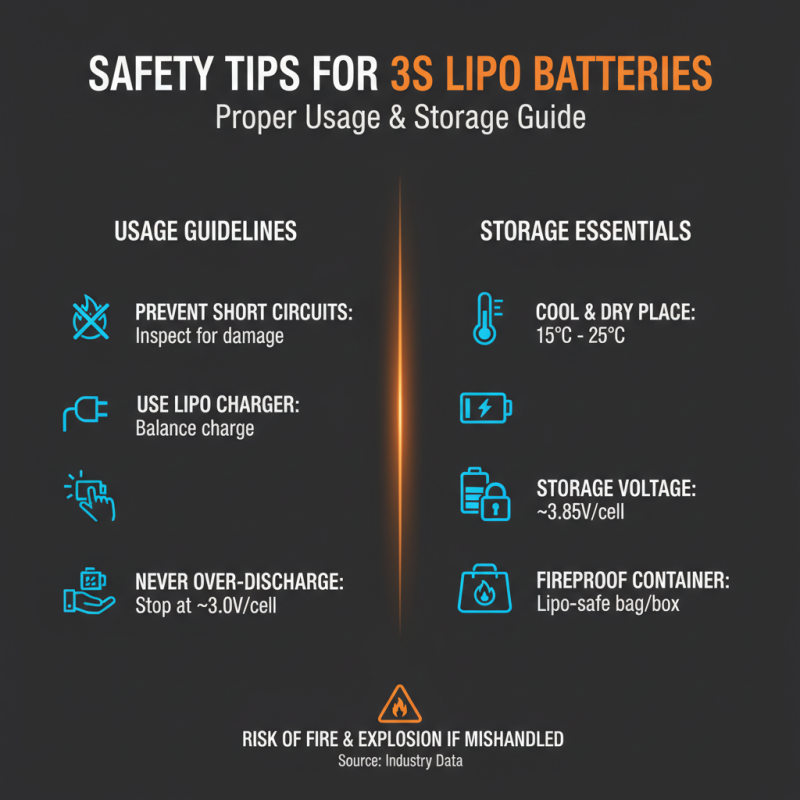
Properly using and storing 3s Lipo batteries is essential for both safety and performance. These batteries have specific requirements due to their chemical composition. According to industry data, improper handling can lead to hazards such as fires, explosions, or damage to equipment. Always store your batteries in a cool, dry place. The ideal storage temperature is between 15°C to 25°C. This range helps maintain battery health, extending its lifespan.
Regularly inspecting batteries for damage is crucial. Look for dents, puffiness, or leaks. If any issues arise, do not attempt to use them. A report indicates that nearly 30% of lipo battery failures result from physical damage. Always use a fireproof container when charging. This adds an extra layer of safety you can't overlook. Additionally, avoid overcharging. Each battery type has a specific voltage limit, and exceeding it can lead to catastrophic failures.
When not in use, consider discharging batteries to a safe storage voltage. Keeping batteries at about 3.7 volts per cell helps maintain their health. Remember that monitoring and proactive care can prevent significant issues. Never ignore signs of wear or damage; this could lead to dangerous situations. Following these guidelines ensures a safer experience with 3s Lipo batteries.

 +86-13928815851
 CONTACT NUMBER
 CONTACT NUMBER