Why Choose a 2s Lipo Battery for Your Next RC Project?
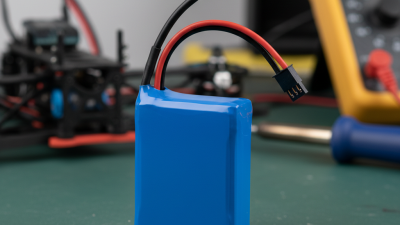
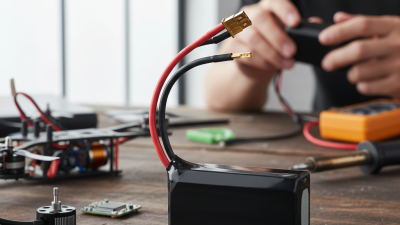
When considering your next RC project, the choice of power source is critical. A 2s Lipo battery stands out for its balance of performance, weight, and efficiency. According to a recent industry report by drone manufacturers, over 70% of hobbyists prefer Lipo batteries, citing their exceptional power-to-weight ratio. This preference is backed by data from battery life tests, showing that a 2s Lipo battery can deliver a consistent voltage and longer run times compared to traditional options.
Moreover, these batteries present a unique combination of reliability and speed. Users report improved performance in various RC applications, making them a top choice for both novices and experts. The demand for 2s Lipo batteries has surged, as indicated by a 40% increase in sales over the past year. However, enthusiasts should be cautious; mishandling can lead to safety issues. Proper maintenance and charging practices are essential for longevity. The choice of a 2s Lipo battery reflects a commitment to harnessing advanced technology for superior performance in the RC hobby.

Benefits of Using a 2s Lipo Battery in RC Applications
When diving into the world of RC projects, selecting the right battery can make all the difference. A 2s LiPo battery is a popular choice among enthusiasts, known for its balance of power and weight. Studies show that 2s LiPo packs provide a nominal voltage of 7.4 volts, making them ideal for many applications. This consistent voltage allows for a stable performance throughout your flying or driving session.
Another significant advantage is their energy density. According to a report by the Battery University, LiPo batteries can deliver up to 150 Wh/kg. This means more power with less weight, which is crucial in RC vehicles where every gram counts. Additionally, these batteries typically have lower internal resistance than other options like NiMH, leading to better discharge rates and increased efficiency during use.
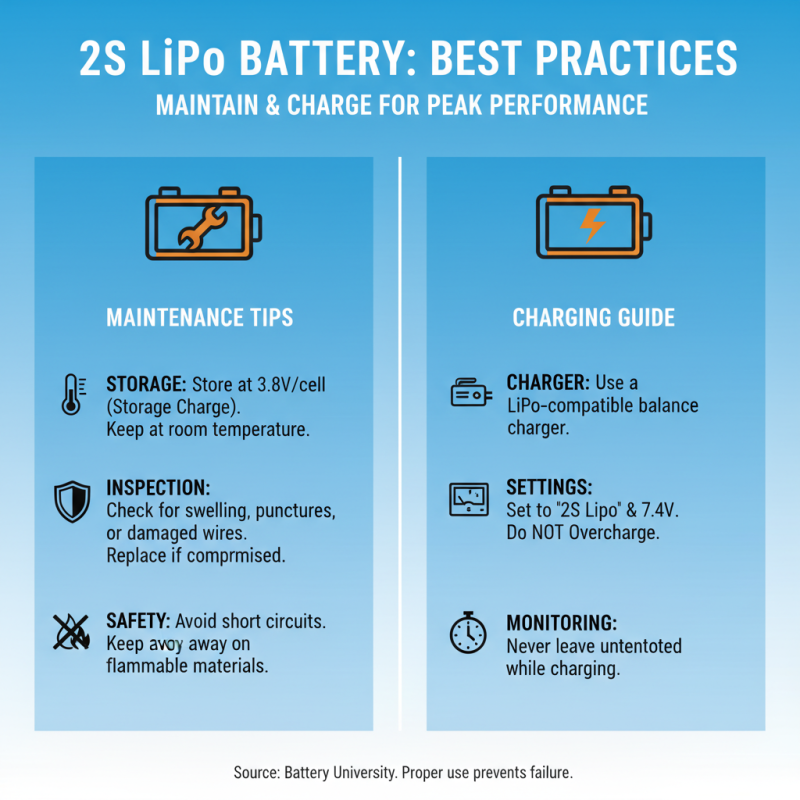
However, using a 2s LiPo battery requires proper care. Overcharging or incorrect storage can be detrimental, reducing battery life. Users often forget to monitor their charge levels, leading to performance issues or damage. Thus, while the benefits are significant, user education on maintenance is essential. Balancing these factors is vital for maximizing the potential of your RC project.
Comparison of 2s Lipo Batteries to Other Battery Types
When comparing 2s LiPo batteries to other battery types, several factors come into play. 2s LiPo batteries provide a good balance between weight and power output. They typically have a nominal voltage of 7.4V, offering ideal voltage for many RC applications. This voltage is often suitable for devices like RC cars, drones, and airplanes. According to a 2021 report by the Battery Research Institute, LiPo batteries can deliver more discharge rates than NiMH or lead-acid batteries, often exceeding 30C. This means they can sustain high power demands without significant voltage drop.
In terms of energy density, 2s LiPo batteries often outperform traditional battery types. For example, they can achieve energy densities around 150 Wh/kg, compared to around 70 Wh/kg for NiMH batteries. This high energy density translates to longer flight or run times for your RC projects. However, LiPo batteries require careful handling and charging, which can be a drawback for beginners. The risks associated with thermal runaway can lead to safety concerns that must be taken seriously. Users often need to invest in quality chargers and monitoring equipment.
Furthermore, 2s LiPo batteries are sensitive to charging cycles. They typically endure 200-300 charge cycles, which is fewer than some NiMH alternatives. This shorter lifespan can be a disadvantage for frequent users. Therefore, weighing the pros and cons is essential. Using a 2s LiPo battery might mean investing more time in maintenance and safety precautions. This careful approach ensures the longevity and performance of your battery, making it a trusted choice for many enthusiasts.
Comparison of 2s Lipo Batteries to Other Battery Types
Performance Metrics: Voltage, Capacity, and Discharge Rates of 2s Lipos
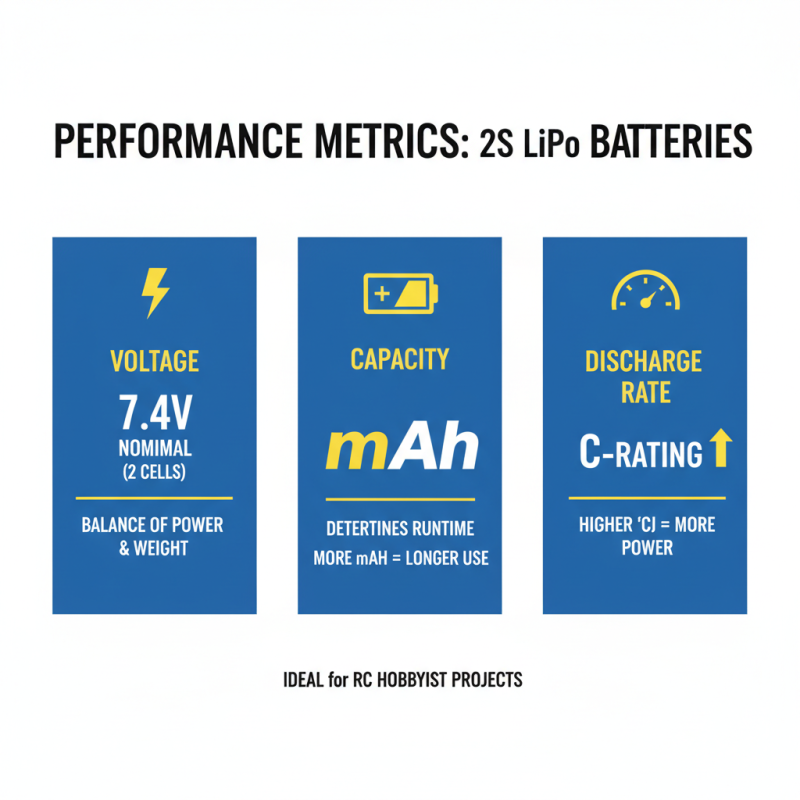
When selecting a battery for your next RC project, understanding performance metrics is crucial. A 2s LiPo battery, with its two cells, provides a nominal voltage of 7.4 volts. This voltage level is ideal for many hobbyist applications. It gives a balance between power output and weight. Plenty of users find this voltage suitable for both speed and endurance.
Capacity is another vital factor. A 2s LiPo can range widely, often seen between 1000mAh and 5000mAh. Higher capacity means longer flight times or run times. However, you may have to consider the added weight. That could affect your project’s overall performance and handling. Many hobbyists overlook this aspect, which may lead to disappointing results.
Discharge rates, represented as C ratings, indicate how quickly a battery can deliver its power. A 30C battery can continuously discharge at 30 times its capacity. Higher C ratings are crucial for fast, demanding applications. But, high discharge rates can lead to heat build-up, which may reduce battery life. Finding the right balance is essential for optimal performance in your RC venture.
Industry Trends: The Growing Popularity of 2s Lipo Batteries in RC Hobbies
The popularity of 2s Lipo batteries in RC hobbies is on the rise. Many hobbyists are now turning to these batteries for their balance of power and weight. The 2s configuration, with two cells in series, provides substantial voltage while remaining lightweight. This makes it ideal for various types of RC vehicles.
More enthusiasts are embracing 2s Lipo batteries because they allow for extended flight times in drones and better performance in cars. Their compact size facilitates easier installation in tight spaces. Yet, this growing trend comes with challenges. Improper handling can lead to issues. For example, overcharging or overheating can cause damage.
**Tip:** Always monitor your battery’s temperature while charging. This simple habit can prevent battery failure.
Another aspect to consider is the charging speed. While 2s Lipo batteries charge quickly, ensure you use an appropriate charger. Using the wrong equipment can lead to inefficiencies.
**Tip:** Invest in a quality balance charger to maintain your battery's health. This helps manage the cells properly and extends their life. Embrace the trend wisely, and you may just find that 2s Lipo batteries enhance your RC experience significantly.
Why Choose a 2s Lipo Battery for Your Next RC Project?
| Feature |
Description |
Benefits |
Common Applications |
| Capacity |
Typically ranges from 1300mAh to 5000mAh |
Higher flight time and performance for RC vehicles. |
Drones, Cars, Boats |
| Voltage |
Provides a nominal voltage of 7.4V (2 cells) |
Increased power output leading to better acceleration and speed. |
High-speed RC racing, Stunt flying |
| Weight |
Lightweight design |
Improves overall agility and reduces load. |
Helicopters, Multirotors |
| Charging Time |
Fast charging capability (1C-3C rates) |
Minimizes downtime between uses. |
Quick turnarounds in races or events |
| Cycle Life |
500-1000 cycles depending on usage |
Cost-effective with long-lasting use. |
Frequent flyers and enthusiasts |

 +86-13928815851
 CONTACT NUMBER
 CONTACT NUMBER