Why Choose 3s Lipo Battery for Your Electronic Needs?
In the ever-evolving landscape of electronics, the choice of power source is crucial. Among various options, the "3s Lipo Battery" stands out for its performance and efficiency. John Smith, a renowned expert in battery technology, once stated, "A reliable power source is the backbone of any electronic device." His insight underlines the importance of selecting the right battery for optimal device functionality.
The 3s Lipo Battery configuration, characterized by three cells in series, provides a balanced and efficient power supply. It delivers higher voltage levels, making it ideal for high-performance electronics. This battery type is commonly used in remote-controlled devices, drones, and electric vehicles. However, its complexity can lead to challenges in charging and maintenance. Understanding these aspects is essential for users.
Investing in a 3s Lipo Battery offers significant advantages, yet it requires careful consideration. Users must acknowledge their need for proper handling and charging practices. One misstep can lead to performance issues. Balancing benefits and challenges can enhance overall user experience and satisfaction.

Understanding the Basics of 3s Lipo Batteries
When choosing power sources for electronics, understanding 3s Lipo batteries is essential. A 3s Lipo battery consists of three lithium polymer cells connected in series. This configuration results in a nominal voltage of 11.1 volts. Many enthusiasts favor this battery type due to its high energy density. According to a report by the International Energy Agency, Lipo batteries can achieve higher energy density levels compared to standard lithium-ion batteries by up to 30%.
The benefits of using 3s Lipo batteries extend beyond just energy density. They provide a lightweight solution, making them ideal for applications in drones and RC vehicles. For example, a standard 3s Lipo can weigh as little as 120 grams. With a discharge rate often exceeding 30C, these batteries can deliver substantial power in demanding situations. However, users must also be cautious of their safety limitations. Overcharging can lead to thermal runaway, a phenomenon that poses severe risks.
Many individuals overlook the importance of proper charging and storage. Multi-cell balance chargers are essential for maintaining battery health. A study from the Battery University revealed that improperly balanced cells can lead to reduced lifespan and performance. These batteries also require careful handling and specific storage conditions to prevent hazards. While the advantages of 3s Lipo batteries are evident, potential users should weigh their choices carefully.
Key Advantages of Using 3s Lipo Batteries in Electronics
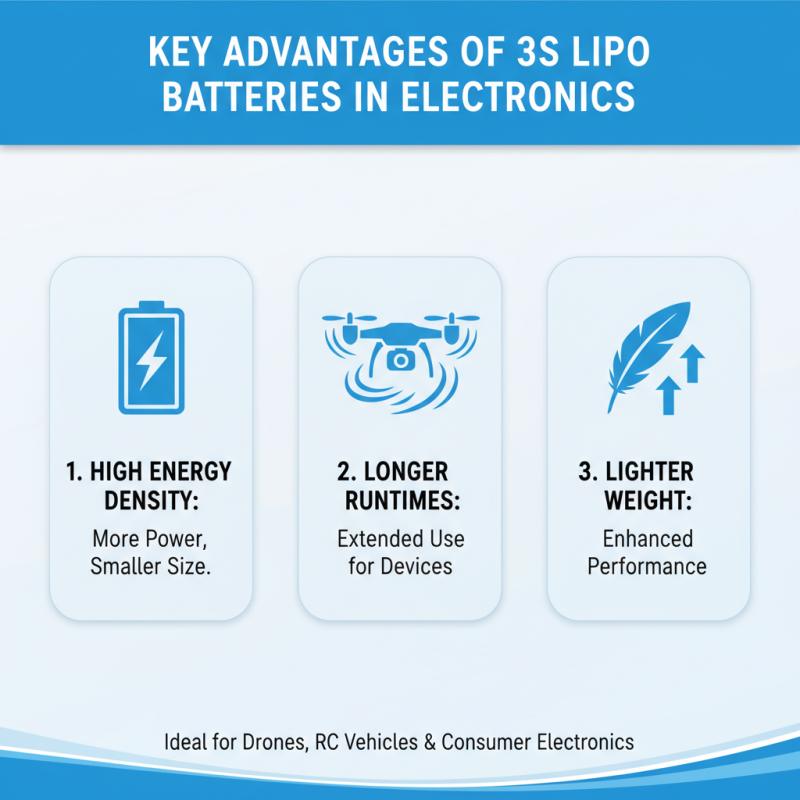
When it comes to powering your electronics, 3s Lipo batteries stand out for several reasons. Their high energy density allows for more power in a smaller package. This makes them ideal for consumer electronics, drones, and RC vehicles. Users benefit from longer runtimes and lighter weights, which can significantly enhance performance.
One key advantage of 3s Lipo batteries is their voltage output. With three cells in series, they provide 11.1 volts, which is often needed for high-performance devices. Higher voltages typically translate to increased performance capabilities. Yet, users must monitor discharge rates closely. Over-discharging can lead to irreversible damage.
Tips: Always balance charge your 3s Lipo batteries to prevent cell imbalance. Consider investing in a quality charger designed for Lipo batteries. Regular inspection of battery connectors can prevent connectivity issues. It's crucial to remember that while these batteries are powerful, they also require responsible usage to avoid potential hazards. Regular maintenance might take time but significantly enhances battery longevity.
Applications of 3s Lipo Batteries Across Various Devices
3s Lipo batteries are versatile power sources for a variety of devices. They are commonly found in drones, RC cars, and portable electronics. These batteries excel due to their high energy density and lightweight design. A 3s Lipo battery can deliver a nominal voltage of 11.1V, making it ideal for applications that require substantial power in a compact form.
Research indicates that the demand for Lipo batteries in consumer electronics has surged. Data shows that the battery market is expected to grow at a CAGR of 20% over the next five years. This growth is driven by increasing adoption in electric vehicles and portable gadgets. Manufacturers appreciate the fast charge capability and long discharge cycles of 3s Lipo batteries, which enhance device performance.
Despite their advantages, users must be cautious. Improper charging and handling can lead to safety hazards. Users have reported incidents of overheating in some products, highlighting the need for better management practices. As technology evolves, further improvements in battery management systems are vital. These steps will ensure that 3s Lipo batteries remain reliable for future applications.
Comparison of 3s Lipo Batteries with Other Battery Types
When comparing 3s LiPo batteries to other battery types, several key factors emerge.
3s LiPo batteries offer a higher voltage than regular NiMH or lead-acid batteries. This means they can deliver more power to devices, making them ideal for high-performance electronics. Users often prefer these for drones, RC vehicles, and other applications that require quick bursts of energy.
However, the advantages of 3s LiPo batteries come with some caveats. They are sensitive to charging and discharging, requiring careful handling. Overcharging can lead to damage and even pose safety risks. In contrast, NiMH batteries are more forgiving but lack the power density of 3s LiPo types. Reliability is important, but the need for vigilance in maintenance can be a drawback for some users.
Cost is another consideration. 3s LiPo batteries can be more expensive upfront. This might be a barrier for hobbyists or casual users. Still, their performance often justifies the investment for serious enthusiasts.
Choosing the right battery depends on specific needs and the balance between performance and safety.
Safety Considerations for Using 3s Lipo Batteries in Electronics
Using a 3s LiPo battery can significantly enhance your electronic devices. However, safety must be a top priority. These batteries store a large amount of energy, making them risky if not handled properly. Overcharging or puncturing can lead to fires or explosions. It’s crucial to monitor the charge levels frequently.
Always use a compatible charger designed for LiPo batteries. Standard chargers may not deliver the correct voltage, leading to dangerous situations. Keep batteries away from extreme temperatures. Extreme heat can cause swelling or leaking, while cold conditions can reduce performance.
Tips: Make regular inspections of your battery for any signs of damage. If you see any bulging or corrosion, it's best to replace it. Never leave a charging battery unattended. This simple practice helps prevent accidents. Lastly, store your batteries in a fireproof container. This adds a layer of safety and can mitigate risks during storage.
Battery Voltage Levels Comparison

 +86-13928815851
 CONTACT NUMBER
 CONTACT NUMBER