+86-13928815851


Lithium Batteries have become the leading power source for electric vehicles, cordless tools, energy storage, and many portable devices. Their appeal is practical: high energy density, stable voltage, and relatively low weight. A lighter battery can help an electric vehicle travel farther, while a compact tool can deliver strong performance without a bulky fuel system.
Industry data supports this shift. The International Energy Agency reported in Global EV Outlook 2024 that global electric car sales approached 14 million units in 2023, representing about 18% of new car sales. The report also noted that electric-vehicle battery demand increased by roughly 40%. Lithium-ion technology remains central to this expansion. BloombergNEF reported that average lithium-ion battery pack prices fell to $115 per kilowatt-hour in 2024, a 20% decrease from the previous year. Lower prices can improve buyer value, although retail costs still depend on design, brand, safety systems, and local supply chains.
Performance matters.
For a buyer, this means more usable energy in a smaller package. A modern battery pack may support a daily commute, power a drill through repeated jobs, or store solar electricity overnight. Lithium Batteries also recharge efficiently and support mature battery-management systems. However, calling them the “best” choice requires care. Cold temperatures, charging habits, recycling access, and upfront price can change the decision. Battery chemistry is not one-size-fits-all. LFP cells, for example, may offer strong durability and lower material costs, while nickel-rich cells can provide higher energy density. Buyers should compare real operating conditions, warranty terms, tested capacity, and safety certifications rather than rely on marketing claims alone.
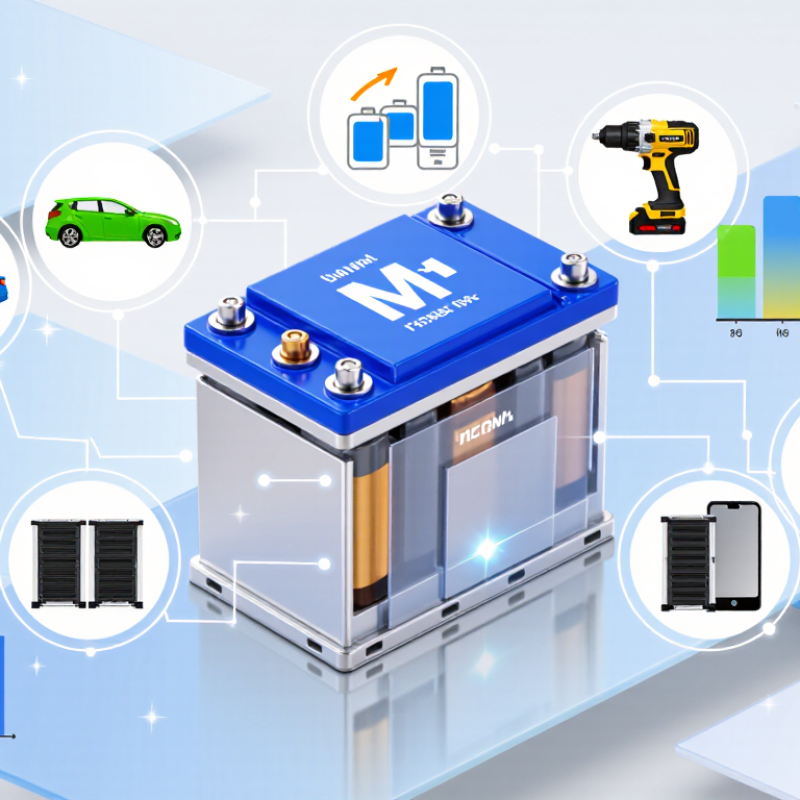
Lithium batteries store energy through moving lithium ions. During discharge, ions travel from the anode to the cathode through an electrolyte. Electrons move through the outside circuit and power a device. A separator keeps the internal layers apart. That small barrier matters. It helps reduce short-circuit risks.
For buyers, lithium-ion batteries offer high energy density, low self-discharge, and strong charging efficiency. A lighter battery can support longer driving or working time. BloombergNEF’s 2023 Battery Price Survey reported an average lithium-ion pack price of 139 dollars per kilowatt-hour, down 14% from 2022. The International Energy Agency also identifies battery cost and performance as key drivers of electric transport growth. Still, “best” needs caution. Heat, poor charging habits, age, and manufacturing quality can reduce capacity. Real use is less perfect than a laboratory chart.
Tips: Check the battery’s usable capacity, warranty terms, operating temperature, and safety certifications. Avoid leaving it in a hot car. Use the recommended charger. I have found that daily charging patterns matter more than impressive peak specifications. A battery may look powerful on paper, yet perform differently in winter. Choose verified test data over vague marketing claims.

Why Are Lithium Batteries the Best Choice for Buyers?
When buyers compare battery types, lithium batteries often offer the strongest balance of weight, capacity, and useful life. A lithium pack can store more energy in a smaller space than many lead-acid alternatives. That difference matters in electric tools, mobility equipment, and backup systems. During practical use, lighter equipment feels easier to carry and install. Lithium batteries also maintain a steadier voltage as they discharge. Lead-acid batteries may become noticeably weaker under heavy loads. Nickel-metal hydride batteries perform reliably, but they usually provide less energy for the same weight. Alkaline batteries remain convenient for low-drain devices, not repeated high-power use.
Lithium is not perfect. It normally costs more at purchase, and poor charging practices can reduce its service life. Quality cells need protection against overcharging, overheating, and excessive discharge. A battery management system adds an important layer of control. Cold temperatures can also reduce available performance, a detail buyers sometimes overlook. In my experience, advertised cycle figures deserve careful reading. Real results depend on heat, load, charging habits, and storage time. That makes a cheaper battery occasionally reasonable, especially for short-term or light-duty use.
Tips: Compare usable capacity, not only the printed rating. Check the charger’s compatibility and the operating temperature range. Ask about protection features, warranty conditions, and replacement access. If the battery will sit unused, store it partly charged in a dry, moderate environment. Measure the full system cost, including downtime and future replacements. A compact battery is helpful, but the right choice depends on the device and daily workload.
Lithium batteries offer buyers more usable energy in a smaller, lighter package. A compact battery can power an electric tool through a long work session without making the tool tiring to hold. This matters for delivery equipment, mobility devices, backup systems, and outdoor electronics. Less weight can also reduce transport effort and installation costs.
Their charging performance is another practical advantage. Lithium batteries usually accept energy efficiently, so users spend less time waiting beside a charger. They also maintain a steadier voltage during use. A lamp stays brighter, and a motor feels more consistent.
In repeated daily use, their longer cycle life can reduce replacement frequency and labor. The initial price may feel high. Total ownership cost can still be lower when the battery is properly managed.
Safety requires attention. A battery management system should monitor temperature, voltage, and charging conditions. Buyers should check storage instructions, charger compatibility, warranty terms, and service support before purchasing.
Lithium batteries are not perfect. Cold temperatures can reduce available power, while poor charging habits may shorten their life. I would not choose only by capacity printed on a label. Real performance depends on load, temperature, charging quality, and maintenance. A simple test under expected conditions often reveals more than a sales specification.
Why Are Lithium Batteries the Best Choice for Buyers?
Safety is a purchasing priority, not a technical footnote. Modern lithium batteries use battery-management systems to monitor temperature, voltage, and current. These controls can reduce overcharging and overheating risks, but they cannot correct physical damage or poor installation. Heat changes everything. The National Renewable Energy Laboratory notes that battery safety depends heavily on cell chemistry, design, and operating conditions. Buyers should check certification, ventilation, protective electronics, and clear maintenance instructions.
Service life also affects real value. Depending on chemistry and usage, lithium batteries commonly deliver thousands of charge cycles. The International Energy Agency reported in Global EV Outlook 2024 that lithium iron phosphate batteries reached nearly 40% of the electric-car battery market in 2023. This chemistry generally offers strong thermal stability and long cycle life, although it may provide less energy density than some alternatives. Numbers need context. Frequent fast charging, high temperatures, and deep discharges can shorten any battery’s useful life.
Environmental performance is more complicated. The IEA estimates that electric vehicles typically produce about half the lifetime greenhouse-gas emissions of comparable conventional vehicles, including manufacturing and electricity use. Recycling can reduce future mineral demand, but collection systems remain uneven across regions. A responsible buyer should examine expected service life, repair options, and end-of-life handling. The cheapest battery is not always the least expensive choice. That distinction is easy to miss.
| Buying Consideration | Lithium-Ion Batteries | Lead-Acid Batteries | Nickel-Metal Hydride | Nickel-Cadmium |
|---|---|---|---|---|
| Typical gravimetric energy density | Approximately 90–265 Wh/kg, depending on chemistry and cell design | Approximately 30–50 Wh/kg | Approximately 60–120 Wh/kg | Approximately 40–60 Wh/kg |
| Typical cycle life | Approximately 500–5,000+ cycles; chemistry, depth of discharge, temperature, and charging control are important | Approximately 200–1,000 cycles; deep discharge can shorten life substantially | Approximately 300–1,000 cycles | Approximately 1,000–2,000 cycles, but performance can be affected by memory effect and regulatory restrictions |
| Calendar life | Often about 3–15 years when properly managed; high heat and full-charge storage accelerate aging | Often about 3–5 years for common designs; premium designs may last longer | Often about 5–10 years under suitable conditions | Often about 8–15 years, subject to maintenance and operating conditions |
| Usable depth of discharge | Commonly 70–90% in managed applications, subject to the manufacturer’s limits | Commonly 30–50% for good service life in many standby or off-grid applications | Commonly 70–80% | Commonly 70–80% |
| Round-trip energy efficiency | Typically about 90–95% | Typically about 75–85% | Typically about 66–80% | Typically about 60–80% |
| Self-discharge during storage | Usually about 1–3% per month, although some designs differ | Usually about 3–5% per month under moderate conditions | Usually about 15–30% in the first month, followed by a lower monthly rate | Usually about 10–20% per month |
| Weight and space requirement | Low weight and compact size for the energy stored | Heavy and comparatively large for the same usable energy | Moderate weight and size | Moderate weight and size |
| Safety profile | Requires a battery-management system, suitable charger, thermal controls, and protection against physical damage; certain chemistries offer improved thermal stability | Generally stable, but can release hydrogen during charging and contains corrosive electrolyte | Generally robust, but may overheat when overcharged and can vent under abuse | Robust in many applications, but can vent under abuse and contains toxic cadmium |
| Performance at high power | Strong power-to-weight performance and stable voltage during discharge | Good short-term current capability, but voltage may decline more noticeably under load | Good power performance, with higher heat generation in some applications | Good power performance and reliable low-temperature behavior |
| Low-temperature behavior | Capacity and charging performance decrease in cold conditions; charging below freezing requires appropriate controls | Capacity decreases in cold conditions, but charging is generally possible with suitable precautions | Capacity decreases in cold conditions | Often performs relatively well in cold conditions, depending on the design |
| Environmental considerations | No lead or cadmium; environmental impact depends on mineral extraction, chemistry, manufacturing energy, and end-of-life recycling | Contains lead and acid, but has a well-established collection and recycling system in many regions | Contains nickel and other materials that require controlled recycling | Contains cadmium, a toxic heavy metal, and is restricted or prohibited in many applications and markets |
| Maintenance requirements | Low maintenance when the battery-management system and charger are correctly matched | Some types require electrolyte checks or ventilation; sealed types still need proper charging | Low maintenance, but charging and heat management remain important | Low maintenance, but periodic conditioning may be needed in some applications |
| Best fit for buyers | Portable electronics, electric mobility, renewable-energy storage, backup power, and applications requiring high usable energy | Low-cost standby power, starter systems, and applications where weight is less important | Consumer devices and applications requiring durable rechargeable cells without lithium chemistry | Specialized industrial or aviation applications where high cycle life and strong low-temperature performance justify the restrictions |
Buyer takeaway: Lithium-ion batteries are often the strongest overall choice because they combine high energy density, high efficiency, substantial usable capacity, low maintenance, and long cycle life. They are not automatically the best option for every application: buyers should verify the chemistry, battery-management system, charger compatibility, operating temperature range, warranty, transport requirements, and local recycling options.
Data note: Figures are typical industry ranges rather than guaranteed specifications. Actual results vary with cell chemistry, design, charging method, temperature, storage conditions, discharge rate, and maintenance. Energy density is measured by mass, while cycle life refers to approximate full-equivalent cycles before noticeable capacity loss.
Why Are Lithium Batteries the Best Choice for Buyers?
How to Choose the Right Lithium Battery for Your Needs
Lithium batteries are compact, powerful, and increasingly practical for transport, backup power, and solar storage. The International Energy Agency reported that global electric vehicle battery demand exceeded 750 GWh in 2023, rising by about 40%. This growth reflects strong technical progress, but popularity should not replace careful selection.
Start with the application. A small fishing device needs different capacity than a home energy system. Check the battery’s voltage, usable capacity, continuous current, and peak current. A higher amp-hour rating does not always mean better performance. It may also mean more weight, cost, and charging time.
Choose the chemistry carefully. Lithium iron phosphate batteries generally offer strong thermal stability and long cycle life. Nickel-based lithium batteries can provide higher energy density, which matters where space is limited. BloombergNEF’s 2024 Battery Price Survey reported an average lithium-ion pack price of 115 US dollars per kWh, but prices vary with chemistry, protection systems, and order volume.
Look for a reliable battery management system. It should monitor temperature, voltage, balancing, and overcurrent conditions. Confirm documented testing, including relevant IEC standards and UN 38.3 transport requirements. Warranty terms deserve close attention too. Some warranties exclude high-temperature use or deep discharge.
No battery fits every buyer.
In practice, many buyers underestimate cold-weather losses and installation limits. I have found that real operating conditions matter more than impressive laboratory figures. Check the manual, measure your daily load, and leave reasonable capacity headroom. The cheapest option can become expensive when replacement, downtime, or unsafe charging enters the calculation.