+86-13928815851


What are the top Ultra-Thin Batteries for global buyers? The answer depends on more than thickness. Buyers must compare capacity, voltage stability, cycle life, operating temperature, and supplier reliability. A battery measuring only a few millimeters may suit a smart card, medical patch, wearable sensor, or compact tracking device. However, its small profile can limit energy storage and discharge performance.
This guide examines leading battery formats, including thin-film, lithium polymer, lithium-ion, and flexible printed designs. It considers real purchasing factors, not just laboratory specifications. These include minimum order quantities, sample availability, production consistency, packaging quality, and transport documentation. Independent test reports and recognized safety certifications should support important claims. Supplier communication also matters. Clear datasheets, traceable materials, and realistic delivery schedules often reveal more than polished product images.
No single battery wins every application. That is worth remembering. A thin lithium polymer cell may provide useful energy in a wearable device, while a printed battery may better support a low-power sensor. Buyers should confirm connector placement, charging limits, storage conditions, and protection circuitry before approval. Even experienced teams can overlook heat buildup inside sealed products. I have found that early sample testing is usually more reliable than comparing catalog numbers alone. Still, field results may differ because device design, humidity, vibration, and usage patterns vary. This overview offers a practical starting point for international sourcing, while final selection should follow engineering validation and applicable regional requirements.
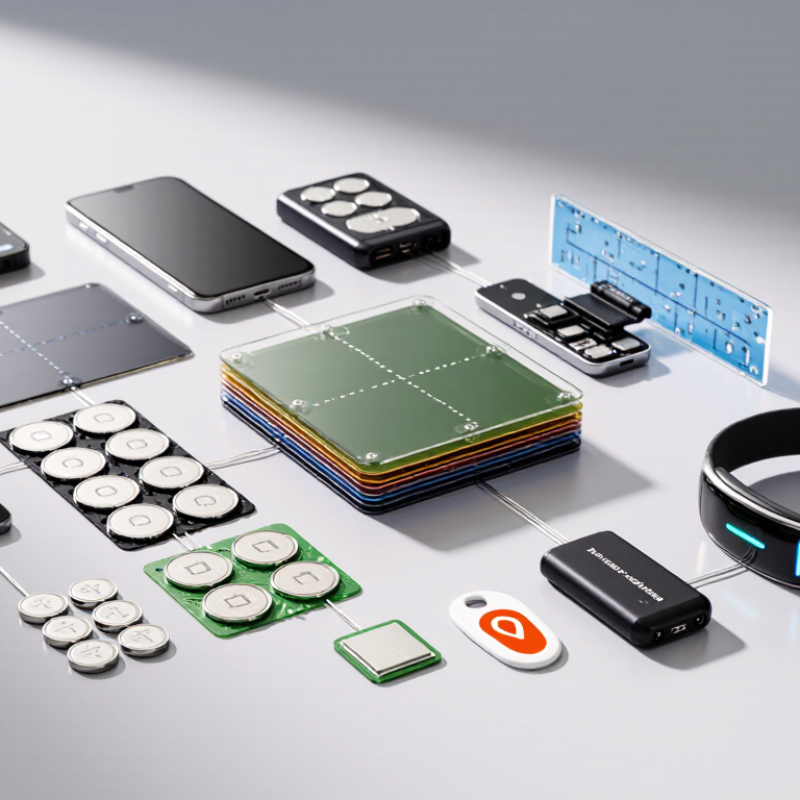
Ultra-thin batteries rely on compact layers rather than simply smaller components. A typical pouch cell uses thin electrodes, a separator, current collectors, and a sealed outer film. Reducing layer thickness saves space, but it also reduces mechanical tolerance. A battery can fit beneath a smart card, medical patch, sensor, or wearable module. It may still need protection against bending, puncture, heat, and moisture.
Performance depends on more than rated capacity. Buyers should compare energy density, operating temperature, cycle life, discharge current, and storage behavior. A cell rated at 20 mAh may perform poorly if the device needs short bursts of high current. In testing, voltage stability and temperature rise often reveal more than headline capacity. Small details matter. Connector resistance can affect real-world runtime.
Designers should also examine charging limits and battery management requirements. Thin pouch cells may swell when overcharged, deeply discharged, or exposed to excessive heat. Flexible construction does not mean unlimited flexibility. Repeated folding can damage internal layers, even when the outer film looks intact. This point is easy to underestimate. I have seen product plans focus on thickness while overlooking fixture pressure and assembly tolerances. That decision can shorten service life.
For global purchasing, request dimensional drawings, safety test reports, lot traceability, and transport documentation. Relevant standards may include IEC 62133-2 and UN 38.3, depending on the application and destination. Samples should be tested inside the finished product, not only on a laboratory bench. That approach exposes charging, impact, and temperature problems earlier.
Representative performance benchmarks for ultra-thin rechargeable battery designs. Values are typical midpoints from publicly reported industry ranges and may vary with cell size, protection circuitry, operating temperature, and charging conditions.
Thickness is shown in millimeters, volumetric energy density in watt-hours per liter, and cycle life represents approximate cycles to around 80% retained capacity. Lower thickness and higher energy density or cycle life generally indicate stronger suitability for compact global electronics.
Ultra-thin batteries differ mainly in chemistry, rechargeability, flexibility, and energy density. Lithium polymer cells suit slim electronics that need steady power and repeated charging. Their soft pouch structure supports custom shapes, but it requires careful protection against punctures, heat, and overcharging. They are common in wearable devices and compact medical equipment.
Thin-film lithium batteries use extremely small layered structures. They provide stable output and long shelf life for sensors, smart cards, and low-power tracking devices. However, their capacity is usually limited. Many are primary batteries, so replacement may be easier than recharging.
Printed zinc-based batteries offer another option. They can be lightweight and flexible, especially for disposable labels or short-term monitoring. Their energy output may drop quickly in demanding applications.
For global buyers, the real comparison begins with operating conditions. A rechargeable cell may seem economical, yet frequent exposure to cold storage can reduce its practical performance. Primary lithium cells often tolerate storage better, but transport documentation must be checked carefully.
Certification requirements vary by destination and product category. Request test records, dimensional drawings, cycle data, and protection details before ordering. Do not trust capacity figures alone.
Actual results can change with temperature, discharge speed, and connector design. I have found that suppliers sometimes describe “ultra-thin” without stating the full assembled thickness. That detail deserves a second look.
What Are the Top Ultra-Thin Batteries for Global Buyers?
Ultra-thin batteries must balance capacity, safety, and operating life. A higher mAh rating is not always better. In compact devices, check the battery’s output under real load, not only its printed capacity. A battery rated at 500 mAh may perform poorly if voltage drops quickly during peak demand. From practical product evaluations, stable discharge often matters more than maximum capacity. Measure runtime with the device switched on, not only in laboratory conditions.
Safety deserves equal attention. Look for consistent insulation, secure terminals, controlled charging, and protection against overcharging or short circuits. Temperature testing is important, especially for devices used outdoors or shipped across climate zones. Swelling, leakage, or unusual heat should never be treated as normal. Operating life also depends on storage conditions, charging habits, and daily duty cycles. Some batteries last longer with moderate charging, but results vary. That uncertainty should be recorded rather than hidden.
Tips: Request capacity data at the intended discharge rate. Ask for cycle-life results and storage-temperature limits. Review independent test records when possible. Compare samples from different production batches, because one sample can create false confidence. Keep a small testing log with runtime, temperature, and voltage readings. It takes little time. Mistakes still happen. A reliable purchasing decision should reflect actual device use, not attractive numbers alone.
Representative specifications for commercially available ultra-thin battery categories. Actual performance depends on cell size, discharge rate, temperature, protection circuitry, and application design.
| Battery Category | Typical Thickness | Nominal Voltage | Typical Capacity | Energy Density | Operating Life | Safety Profile | Best-Fit Applications |
|---|---|---|---|---|---|---|---|
| Ultra-Thin Lithium-Ion Polymer Pouch | Approximately 0.8–5.0 mm | 3.6–3.7 V | 20–1,000 mAh | Approximately 120–250 Wh/kg | About 300–800 charge cycles, typically retaining 70–80% capacity depending on charging conditions | Medium Requires protection against overcharge, over-discharge, short circuit, and thermal abuse |
Wearables, compact medical devices, tracking products, smart cards, and portable electronics |
| Thin-Film Solid-State Rechargeable Battery | Approximately 0.1–1.0 mm | 2.0–4.0 V, depending on cell design | 0.1–10 mAh | Approximately 200–700 Wh/L | Often 1,000–10,000+ cycles at low current; capacity is generally limited | High Non-flammable solid electrolyte designs reduce leakage and thermal-runaway risks |
Microelectronics, sensors, RFID devices, medical implants, and low-power connected devices |
| Lithium Manganese Dioxide Coin Cell | Approximately 1.6–5.4 mm | 3.0 V | 25–500 mAh | Approximately 200–300 Wh/kg | Typically 5–15 years of shelf life; single-use primary chemistry | Medium Stable under normal use, but lithium cells require protection from short circuit, crushing, heat, and incorrect charging |
Real-time clocks, memory backup, calculators, meters, sensors, and compact electronic devices |
| Silver-Oxide Button Cell | Approximately 1.0–5.4 mm | 1.55 V | 20–200 mAh | Approximately 100–200 Wh/kg | Typically 2–10 years in storage; single-use primary chemistry | High Provides stable voltage and good leakage resistance when properly manufactured and handled |
Watches, precision instruments, medical accessories, and small measurement devices |
| Zinc-Air Button Cell | Approximately 3.0–6.0 mm | 1.4 V | 100–700 mAh | Approximately 200–400 Wh/kg at the cell level | Usually 3–20 days after activation in hearing-aid use; unopened shelf life is commonly 2–4 years | High Aqueous chemistry is generally non-flammable; performance depends strongly on air access and humidity |
Hearing devices and other low-drain products requiring high capacity in a small volume |
| Nickel-Metal Hydride Button or Thin Cylindrical Cell | Approximately 5.0–12.0 mm | 1.2 V | 20–250 mAh | Approximately 50–100 Wh/kg | About 300–500 charge cycles; typical service life is 2–5 years depending on use and storage | High Aqueous electrolyte is less prone to fire than conventional lithium-ion chemistry, but overcharging can generate heat and gas |
Rechargeable instruments, emergency lighting, toys, and low-power consumer electronics |
| Lithium-Thionyl Chloride Thin Primary Cell | Approximately 8.0–15.0 mm in compact cylindrical formats | 3.6 V | 200–3,600 mAh | Approximately 350–650 Wh/kg | Typically 10–20 years of shelf or service life at low continuous drain | Medium Excellent energy retention, but the primary lithium chemistry requires strict controls for short circuit, heat, and pulse-current conditions |
Utility meters, industrial sensors, alarm systems, and remote monitoring equipment |
Buyer guidance: Select rechargeable lithium-ion polymer cells when higher capacity and compact size are priorities; choose thin-film solid-state cells for very small, low-power devices where safety and cycle life matter most; use primary coin cells for long shelf life and low maintenance. Verify transport classification, UN 38.3 test status, safety data sheets, regional recycling requirements, and protection-circuit specifications before international procurement.
Ultra-thin batteries should be selected by application, not appearance. A 0.5-millimeter cell may suit a smart card, but fail inside a medical patch. Designers must compare capacity, voltage stability, discharge rate, flexibility, and storage life. The load profile matters more than the label. Short wireless transmissions can create sharp current pulses. A battery with higher capacity may still perform poorly during those moments.
For wearable sensors, low thickness and stable output usually matter most. Rechargeable cells can reduce replacement waste, but they need suitable protection circuits. Primary cells may fit products requiring long shelf life and minimal maintenance.
Temperature also changes the decision. A tracker stored in a delivery vehicle may face heat, cold, and vibration. Test it there. Laboratory results alone can mislead.
Global buyers should request safety data, traceability records, and production test results. Relevant requirements may include IEC standards and UN 38.3 transport testing, depending on the battery type and destination.
Suppliers should explain tolerances, tab placement, sealing methods, and available sample quantities. In prototype reviews, teams sometimes choose the thinnest option too early. That choice can create weak runtime or difficult assembly.
Thin is useful. It is not automatically better.
A practical evaluation should include real devices, repeated charging, aging tests, and measured performance after storage.
Global buyers need more than the thinnest battery. They need a supplier that can deliver stable performance across borders. MarketsandMarkets’ 2024 Thin-Film Battery report projects the market to grow strongly through 2028, driven by smart cards, medical wearables, and connected devices. This growth attracts new factories, but capacity claims can be unclear. Ask suppliers for verified thickness, nominal capacity, operating temperature, shelf life, and batch consistency. A battery measuring 0.45 millimeters may still fail if its connector adds two millimeters.
Supplier evaluation should include engineering experience and documented quality controls. Request test reports based on recognized IEC standards, especially IEC 60086 where applicable. Check whether the supplier performs aging tests, leakage inspections, dimensional checks, and electrical sampling before shipment. UL Solutions’ battery safety guidance emphasizes traceability, abuse testing, and controlled manufacturing processes. These details matter when products travel through different climates. I once focused too heavily on price. That decision ignored packaging damage and delayed samples. It was not efficient.
Tips: Compare at least three suppliers. Request samples from separate production batches. Confirm minimum order quantities, lead times, export documents, and replacement policies in writing. Ask for recent laboratory reports, not only presentation slides. Also, test batteries inside your actual device. Bench results can look excellent, while a thin enclosure creates pressure, heat, or poor contact. A supplier may sound professional. Evidence matters more.