+86-13928815851


Choosing a reliable Chinese supplier requires more than comparing the lowest quotation. A 100mAh LiPo battery may look simple, yet its quality depends on cell consistency, protection design, connector accuracy, and production control. Buyers often search for “100mamph Lipo Battery,” although the technically correct term is 100mAh LiPo battery. This guide introduces practical ways to evaluate leading Chinese suppliers for international projects.
Experienced buyers should examine discharge performance, cycle life, charging limits, and physical dimensions. A sample can reveal loose wires, uneven wrapping, or unstable voltage. Small details matter. Ask suppliers for datasheets, test reports, safety documentation, and clear production records. Confirm whether certificates match the actual battery model, not an unrelated product. Manufacturing experience in medical devices, wearables, drones, or portable electronics can also indicate stronger process control.
Communication is equally important. Reliable suppliers explain minimum order quantities, customization limits, lead times, packaging, and after-sales procedures without vague promises. They should discuss realistic capacity tolerance and storage conditions. Global buyers must also verify shipping requirements with qualified logistics partners. Regulations and transport rules may differ by destination. No supplier is perfect, and a polished website proves little. Even this evaluation approach has limits, especially when factory data is incomplete. Therefore, independent samples and third-party testing remain valuable. The strongest supplier is not always the cheapest. It is the partner that delivers consistent cells, honest specifications, responsive support, and traceable quality over time.
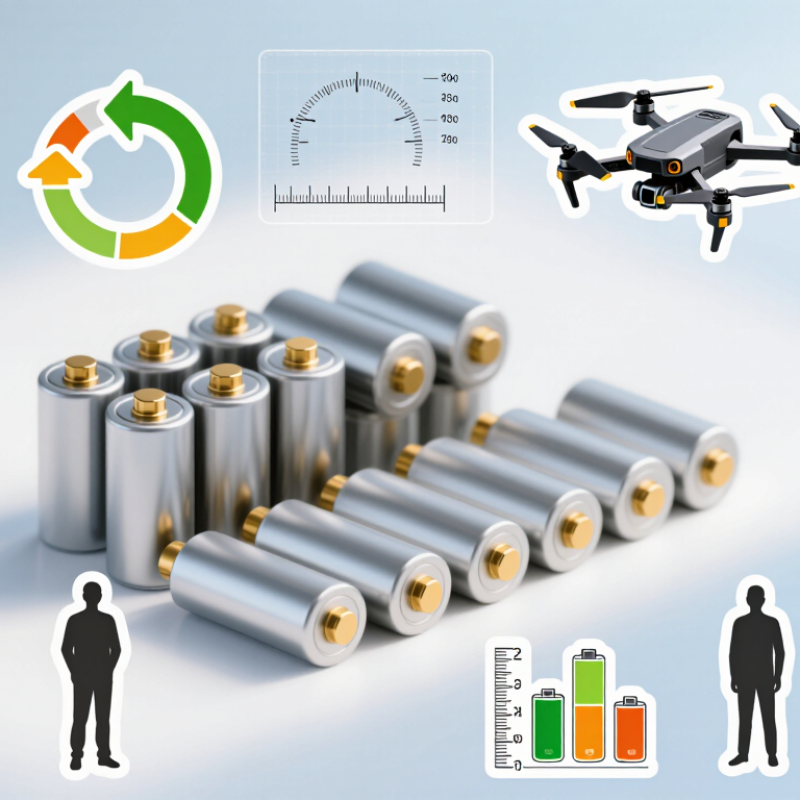
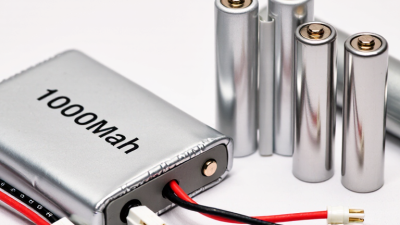
A 100mAh LiPo battery is a compact rechargeable cell that can theoretically deliver 100 milliamperes for one hour. Real performance varies with discharge rate, temperature, age, and device efficiency. Its nominal voltage is usually 3.7V, while full charging reaches about 4.2V. That difference matters when selecting charging circuits and voltage regulators.
Small size is the main advantage. A 100mAh pouch cell may fit inside a smart sensor, wireless earbud accessory, fitness device, or miniature tracking unit. It can also support low-power Bluetooth products, portable medical monitors, and compact educational robots. However, capacity alone does not define suitability. Buyers should check dimensions, weight, discharge rating, connector type, cycle life, and protection requirements. Tiny cells still need careful handling.
A supplier should provide test data, production traceability, and clear tolerances. Ask whether the stated capacity was measured under a realistic load. A cell tested slowly may appear stronger than it performs in daily use. That is easy to miss. For short bursts, such as a small motor or radio transmission, the battery must support the required current without excessive voltage drop. Engineers should also review charging limits, insulation, storage conditions, and transport documentation. In practice, a slightly larger cell may deliver more reliable service than a tightly packed 100mAh design. My own view is cautious: published figures guide selection, but prototype testing exposes the inconvenient details.
China Top 100mAh LiPo Battery Suppliers for Global Buyers
Global buyers source 100mAh LiPo batteries from China for practical reasons. China has a dense supply network for cells, protection circuits, connectors, and custom battery packs. This shortens communication between engineering and production teams. A buyer can request a 3.7V cell, a 20 × 12 × 5 mm format, or adjusted wire lengths. Samples often reveal whether the battery truly fits the device.
Cost is another factor, but price alone can mislead. Experienced buyers compare capacity, discharge performance, cycle data, and protection quality. They also review factory test records, incoming material controls, and batch traceability. Some suppliers support small pilot orders before mass production. That reduces early risk.
Useful details matter. Ask for sample charging results, dimensional tolerances, connector drawings, and storage guidance. Confirm UN 38.3 transport testing and other destination-market requirements before shipment. A supplier may provide RoHS or IEC-related documents, but buyers should check their validity and scope. Paperwork is not proof of consistent production.
China’s manufacturing ecosystem can also support custom packaging for sensors, medical devices, wearables, and compact electronics. Yet small cells require careful handling. I have seen a battery pass a sample test and perform differently in a later batch. That is why independent inspection, capacity sampling, and clear acceptance standards remain important. Cheap is not always efficient. Reliability takes verification.
A 100mAh lithium-polymer battery provides approximately 0.37Wh of energy at a nominal voltage of 3.7V. This compact energy profile is suitable for small electronics, wearable devices, sensors, trackers, and portable accessories. The chart compares calculated energy output across common small LiPo capacities, helping buyers evaluate the balance between compact size and available energy when selecting suppliers.
Energy calculation: nominal voltage × capacity in amp-hours. Actual battery performance varies by cell design, discharge rate, temperature, protection circuitry, and operating conditions.
China Top 100mAh LiPo Battery Suppliers for Global Buyers
China remains central to battery manufacturing. The IEA’s Global EV Outlook 2024 reports that China produced about 80% of global battery cells in 2023. This scale helps smaller buyers access competitive 100mAh LiPo cells, but factory size alone proves little. Request a current datasheet showing nominal voltage, rated capacity, discharge rate, dimensions, weight, and charging limits. Confirm capacity at a stated test condition, such as 0.2C and 25°C. A number without test conditions is weak evidence.
Evaluate the supplier through samples, not polished quotations. Check five to ten samples for capacity spread, internal resistance, swelling, connector quality, and thickness after storage. Ask for lot traceability and quality records. Independent testing should cover IEC 62133-2 where applicable, UN 38.3 transport testing, and market-specific chemical requirements. The Battery Council International’s technical guidance also highlights temperature control and abuse testing as important safety considerations. Still, reports can be outdated. Verify the model and production batch.
Tips: Compare samples from different lots. Ask who performed each test. Require sealed packaging, moisture controls, and clear warranty terms. A factory may promise 100mAh, yet deliver inconsistent cells. That gap deserves attention. Also inspect pilot-run performance before placing a large order. Supplier evaluation is partly technical, partly skeptical.
China Top 100mAh LiPo Battery Suppliers for Global Buyers
Key Quality, Safety, and Certification Requirements
A reliable 100mAh LiPo supplier should provide consistent capacity, stable voltage, and documented production controls. Ask for test data from recent production batches, not only laboratory samples. Capacity testing should state discharge current, cutoff voltage, temperature, and test duration. Small cells can still show large performance differences. Check internal resistance, cell thickness, weight, and connector quality during incoming inspection.
Safety evidence deserves closer attention. Suppliers should provide applicable UN 38.3 transport test records and IEC 62133-2 safety documentation. Depending on the destination market, buyers may also require RoHS, REACH, or recognized cell safety reports. Verify the certificate holder, model number, laboratory, testing date, and product scope. A certificate alone proves little if it covers another cell design. Ask how the supplier controls overcharge, short circuit, overheating, and swelling risks. Protection circuits must match the battery’s actual operating limits.
Traceability is equally important. Each carton should identify the production lot, date code, cell specification, and inspection result. Request samples from multiple lots before approving a long-term order. Inspect insulation, welded tabs, pouch sealing, and connector polarity. Keep retained samples for comparison. Mistakes happen. Even experienced buyers can overlook a changed separator, adhesive, or wire gauge. Supplier audits, clear change-control procedures, and independent pre-shipment testing reduce that risk. Some documents may look complete, yet practical verification remains necessary.
Supplier qualification and product verification matrix for compact lithium-polymer battery procurement
| Evaluation Area | Typical Requirement for a 100mAh LiPo Battery | Recommended Verification Evidence | Buyer Acceptance Check |
|---|---|---|---|
| Nominal Voltage | 3.7V nominal for a standard single-cell lithium-polymer battery; 4.2V is the normal full-charge voltage for many single-cell designs. | Cell specification sheet, charge-profile documentation, and sample electrical test report. | Confirm that the charger and end product are designed for the specified cell voltage and chemistry. |
| Rated Capacity | 100mAh rated capacity at the supplier’s stated test conditions, including discharge current, end-of-discharge voltage, and temperature. | Capacity test records from calibrated equipment and a documented test method. | Test production samples at the agreed current and cutoff voltage; do not compare values measured under different conditions. |
| Dimensions and Weight | Custom dimensions are common for 100mAh pouch cells. Thickness, length, width, connector, and mass must be defined on the approved drawing. | Controlled mechanical drawing, dimensional inspection report, and sample measurement records. | Check fit inside the enclosure, clearance around the pouch, cable routing, and connector polarity. |
| Discharge Capability | Continuous and pulse discharge ratings must be stated separately and expressed with test conditions. A 1C reference for 100mAh equals 100mA, but the permitted current depends on the cell design. | Discharge curves, internal-resistance data, thermal test results, and product datasheet. | Verify that peak-load duration, voltage drop, temperature rise, and protection limits meet the device requirements. |
| Cycle Life | Cycle-life claims must specify charge rate, discharge rate, voltage limits, temperature, rest periods, and end-of-life capacity threshold. | Laboratory cycle-life report using the same configuration as the proposed product. | Reject unsupported cycle counts that do not identify test conditions or capacity-retention criteria. |
| Protection Circuit | Where required by the application, the battery pack should include protection against overcharge, over-discharge, overcurrent, and short circuit. | Protection-circuit schematic, component specification, trigger thresholds, and validation test report. | Confirm protection tolerances, reset behavior, load compatibility, and whether the end product has additional protection. |
| Charging Requirements | Single-cell LiPo batteries commonly use constant-current/constant-voltage charging to a specified upper voltage, frequently 4.2V; the supplier must define the approved charge current. | Approved charging specification, charger compatibility test, and abnormal-charging test results. | Never rely on a generic charger; match the charger voltage, current, termination method, and battery protection design. |
| Cell Matching | For single-cell products, capacity, voltage, internal resistance, and self-discharge consistency should be controlled across production lots. | Incoming-material inspection plan, lot traceability records, and statistical quality-control data. | Review sampling levels, rejection limits, and the supplier’s process for isolating nonconforming cells. |
| Safety Testing | The battery should be evaluated against applicable abuse, electrical, mechanical, and environmental safety requirements for its intended use. | Test reports from a competent laboratory, including model number, construction, test configuration, and report validity. | Ensure the tested model, protection circuit, cell construction, and production site match the offered product. |
| UN 38.3 Transport Testing | Lithium-ion cells and batteries offered for transport generally require successful UN Manual of Tests and Criteria, Part III, subsection 38.3 testing and appropriate transport documentation. | UN 38.3 test summary or applicable test report, shipping classification, and packaging instructions. | Check that the test summary identifies the exact cell or battery type and that shipment documents are prepared correctly. |
| IEC Safety Standards | IEC 62133-2 may apply to portable sealed secondary lithium cells and batteries; applicability depends on product design and intended market. | Current test report or certification covering the exact model and configuration. | Verify the edition, scope, laboratory competence, model coverage, and any stated limitations. |
| Transport and Product Marking | Markings should identify chemistry or battery type, rated voltage, capacity or energy where required, polarity, traceability information, and relevant handling symbols. | Artwork approval, label specification, packaging photographs, and traceability procedure. | Confirm labels comply with the destination market and transport mode before mass production. |
| Restricted Substances | Materials and components may need to comply with destination-market restrictions such as EU RoHS and REACH requirements. | Material declarations, supplier declarations of conformity, and third-party substance screening where required. | Review the full bill of materials, including pouch film, electrolyte-related components, cables, connectors, and solder materials. |
| Quality Management | A documented quality system should control incoming materials, electrode and pouch assembly, formation, aging, final inspection, and shipment release. | Quality-system certificate where applicable, process flow, control plan, inspection records, and corrective-action history. | Audit process controls and verify that the certificate scope covers battery manufacturing rather than only trading activity. |
| Traceability | Each production lot should be traceable to raw materials, manufacturing date, test results, operator or equipment records, and shipment quantity. | Lot-code format, manufacturing records, certificate of analysis, and recall procedure. | Require traceability from delivered battery to cell lot and final inspection result. |
| Packaging and Storage | Batteries should be protected from short circuit, crushing, moisture, heat, and accidental activation during storage and transport. | Packaging specification, state-of-charge procedure, warehouse conditions, and transport packing instructions. | Inspect insulation, terminal protection, carton strength, storage temperature, and inventory age. |
| Commercial and Supply Capability | The supplier should provide stable lead times, minimum-order quantities, sample support, engineering changes, warranty terms, and continuity planning. | Written quotation, capacity statement, production schedule, quality agreement, change-notification procedure, and warranty policy. | Approve the supplier only after samples pass technical validation and commercial terms are aligned with the launch plan. |
Note: Certification and regulatory requirements vary by battery configuration, end product, destination market, and transport mode. Buyers should verify the latest applicable requirements with the relevant testing laboratory, certification body, and logistics provider.
China Top 100mAh LiPo Battery Suppliers for Global Buyers
Comparing a 100mAh LiPo quote requires more than checking the unit price. Request cell dimensions, nominal voltage, discharge rate, capacity tolerance, cycle data, and protection options. A cheaper cell may need custom tooling or produce higher rejection rates. The IEA’s Global EV Outlook 2024 reports that global battery demand exceeded 750 GWh in 2023, rising about 40% year on year. This scale encourages competitive pricing, but quality still varies between production batches. Ask for recent test reports, not only a sales sheet. Compare MOQ, sample charges, tooling fees, lead time, payment terms, and Incoterms on one worksheet. Some details are easy to miss.
Tips: Order several samples from the same batch. Measure capacity with a calibrated tester at the stated current. Check thickness after charging, wire length, connector fit, and voltage stability. Keep photographs and test records. A spreadsheet helps, although it will not reveal every factory problem.
Before shipment, request the UN38.3 test summary, Safety Data Sheet, packing details, and battery classification. IATA’s 2025 Dangerous Goods Regulations require careful packaging and documentation for air transport. Sea freight may reduce cost, but schedules can be less predictable. Confirm whether the quote includes compliant packaging, export handling, freight, insurance, and destination charges. For samples, air shipping is practical; larger orders may suit sea freight. Do not assume “small battery” means simple shipping. A missing document can delay cartons for days. Supplier claims should be verified independently.