2026 Top 3.7 V Lipo Battery Innovations and Trends?
In the evolving world of electronics, the 3.7 V Lipo Battery stands out as a powerhouse. Innovations in this field can change how we power devices. Expert Dr. Emily Carter states, “The future of energy storage lies in lithium polymer technologies.”
The year 2026 promises intriguing advancements. Battery efficiency and safety are crucial aspects gaining attention. New materials and designs are emerging. They aim to enhance energy density and reduce charging times. Yet, these innovations are not without their challenges. The balance between performance and safety must be carefully managed.
Despite the potential, the path forward is complex. Manufacturers face difficulties in scalability and sustainability. The reliance on lithium sources raises environmental concerns. Continued research is needed to address these pressing issues. The journey of the 3.7 V Lipo Battery is a blend of promise and obstacles, but it is one worth pursuing.

2026 Advances in 3.7 V LiPo Battery Chemistry and Materials
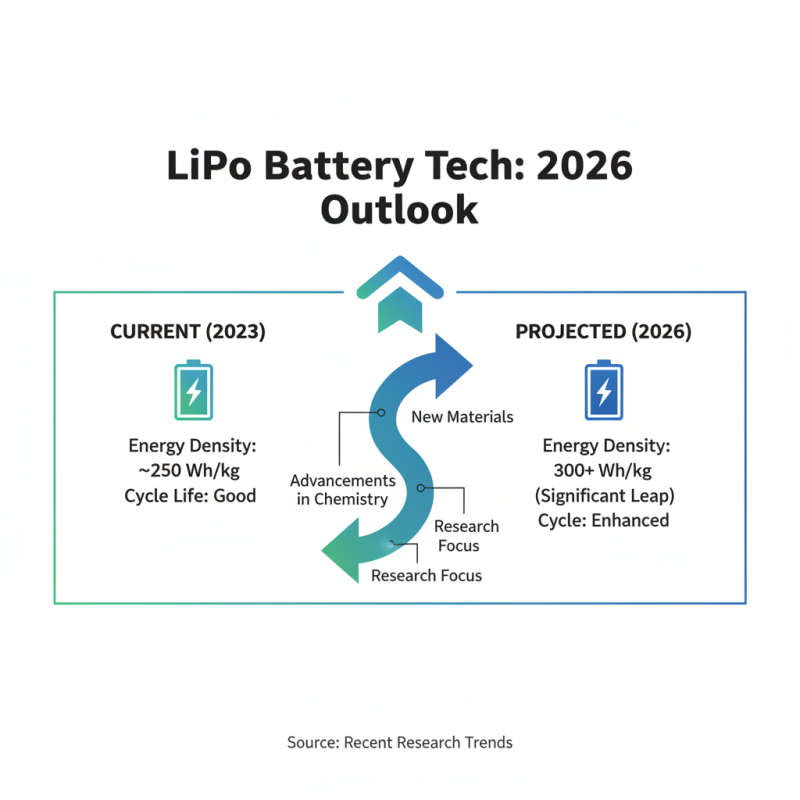
Recent advancements in 3.7 V LiPo battery chemistry reveal exciting trends for 2026. Researchers focus on enhancing energy density and cycle life. Current lithium-ion technologies often reach energy densities around 250 Wh/kg. However, innovative materials could push this to 300 Wh/kg or more, a significant leap.
One area of research involves the use of silicon anodes. Traditional graphite anodes are limited in capacity. Silicon can theoretically store ten times more lithium ions. Cycling stability remains a concern, though. Achieving a practical solution that addresses swelling and capacity fade over time is crucial.
Another noteworthy trend focuses on solid-state electrolytes. Liquid electrolytes can pose safety risks due to flammability. Solid-state solutions promise higher stability and efficiency. Current prototypes show potential, yet mass production hurdles exist. Cost-effective manufacturing methods need development. The quest for optimal materials continues, reflecting the industry's dynamic landscape.
Impact of Solid-State Technology on LiPo Battery Performance
Solid-state technology is transforming LiPo batteries. This innovation enhances safety and performance. Traditional LiPo batteries face risks of leakage and combustion. Solid-state batteries use a solid electrolyte. This solid structure increases thermal stability and reduces hazards.
Moreover, solid-state technology improves energy density. Higher energy density means longer battery life for devices. This is crucial for consumer electronics. Users seek longevity in their gadgets. Yet, there are challenges. Production costs are higher. Scaling up manufacturing remains a hurdle. As a result, widespread adoption may take time.
The materials used also raise questions. Some solid electrolytes are still in testing phases. Researchers are exploring various compositions. The perfect combination is yet to be found. For now, progress is steady but not rapid. Future innovations may offer exciting solutions.
Emerging Trends in LiPo Battery Capacity and Cycle Life Improvements
As the demand for high-performance LiPo batteries increases, the focus on capacity and cycle life has intensified. Recent reports indicate that advancements in battery chemistry could lead to up to a 30% boost in energy density by 2026. This development is essential for applications ranging from consumer electronics to electric vehicles. Many industries are looking closely at these trends.
Improvements in battery materials, such as silicon anodes, are gaining attention. Silicon can potentially store ten times more lithium than traditional graphite. However, challenges remain. The expansion of silicon during charging can cause degradation over time. This may lead to shorter battery life, which requires careful engineering solutions.
There's also a rise in research around solid-state technology. These batteries promise higher energy density and safer operation. However, scaling up production remains a hurdle. Many experts suggest that achieving commercial viability may take a few years. Users may face higher costs in the short term as manufacturers refine processes. These factors could slow down widespread adoption, prompting further questions on achieving a balance between innovation and practicality.
2026 Innovations in LiPo Battery Capacity and Cycle Life
Market Demand for High-Efficiency 3.7 V LiPo Batteries in Consumer Electronics
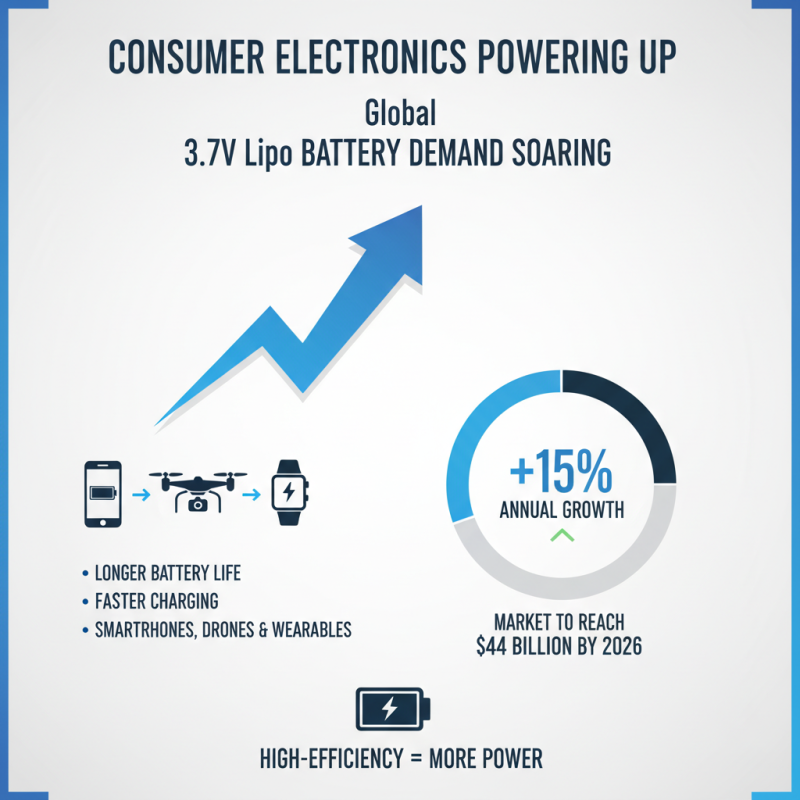
As consumer electronics evolve, demand for high-efficiency 3.7 V LiPo batteries is surging. According to a recent market report, the global market for these batteries is expected to grow by 15% annually, reaching $44 billion by 2026. This rise reflects consumers' desire for longer battery life and faster charging times in smartphones, drones, and wearables.
Innovations in battery technology also play a crucial role. Solid-state batteries are gaining attention, offering lighter weight and higher energy density. However, challenges in manufacturing and scalability remain. Additionally, faster charging capabilities are critical. Industry research shows that more than 70% of users prefer devices that can achieve 80% charge within 30 minutes. Yet, safety concerns with rapid charging techniques often arise, highlighting a need for further refinement.
While the market is promising, sustainability must not be overlooked. The environmental impact of lithium sourcing and battery disposal is significant. Reports indicate that only 5% of lithium batteries are currently recycled. As demand grows, manufacturers face increased pressure to adopt eco-friendly practices. Questions remain about how innovation can balance efficiency with sustainability in the 3.7 V LiPo battery sector.
Regulatory Trends Shaping the Future of LiPo Battery Manufacturing
Regulatory trends play a crucial role in shaping the future of LiPo battery manufacturing. As demand grows, so do the guidelines. These regulations target safety, recycling, and environmental impact. Manufacturers must adapt to new standards. Compliance ensures protection for consumers and the planet.
Many rules focus on reducing hazardous materials. This shift fosters a cleaner production process. Meanwhile, regulations promote recycling initiatives. Batteries often end up in landfills, creating environmental issues. Responsible disposal and recycling practices are now more important than ever.
Tips: Always stay updated on regulations affecting production. Regular training for staff can ensure compliance. It’s essential to understand the legal landscape thoroughly. Innovate within these guidelines to maintain a competitive edge. Reflect on current practices and seek areas for improvement.
2026 Top 3.7 V Lipo Battery Innovations and Trends
| Innovation/Trend |
Description |
Impact |
Regulatory Focus |
| Silicon Anode Technology |
Integration of silicon to improve energy density and cycle life. |
Higher capacity, longer lifespan batteries. |
Compliance with safety standards for new materials. |
| Faster Charging Solutions |
Advancements in ultra-fast charging technology. |
Decreased downtime for users. |
Regulations on fast charge safety measures. |
| Recyclable Battery Designs |
Focus on eco-friendly materials and recyclability. |
Reduced environmental impact. |
Adherence to environmental laws and recycling mandates. |

 +86-13928815851
 CONTACT NUMBER
 CONTACT NUMBER