+86-13928815851


Choosing the right Rc Car Battery for long run time is not as simple as buying the pack with the biggest capacity number. Voltage must match your vehicle’s motor and electronic speed controller, while battery size and connector type must fit the chassis. A pack that runs longer on paper may also add weight, affect handling, or fail to fit securely. Small details matter.
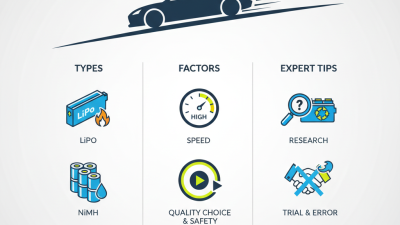
This guide explores how battery chemistry, capacity, discharge rating, and charging habits influence practical run time. Lithium polymer packs can offer strong performance, but they require a compatible charger and careful handling. Nickel-metal hydride packs may suit some beginner setups, though their weight and voltage behavior can differ. Neither choice is automatically best. It depends on your car, driving style, and maintenance routine.
Run time also changes with terrain, throttle use, gearing, tire grip, and temperature. A car racing through thick grass may drain its battery faster than one cruising on smooth pavement. That makes advertised figures useful for comparison, not a promise. It is tempting to chase the highest milliamp-hour rating; I would not do that without checking fit and electrical compatibility. A little uncertainty remains, even with careful comparisons. The goal here is to help you weigh these trade-offs, understand which specifications deserve attention, and choose a dependable battery for longer sessions—not just a larger number on the label.
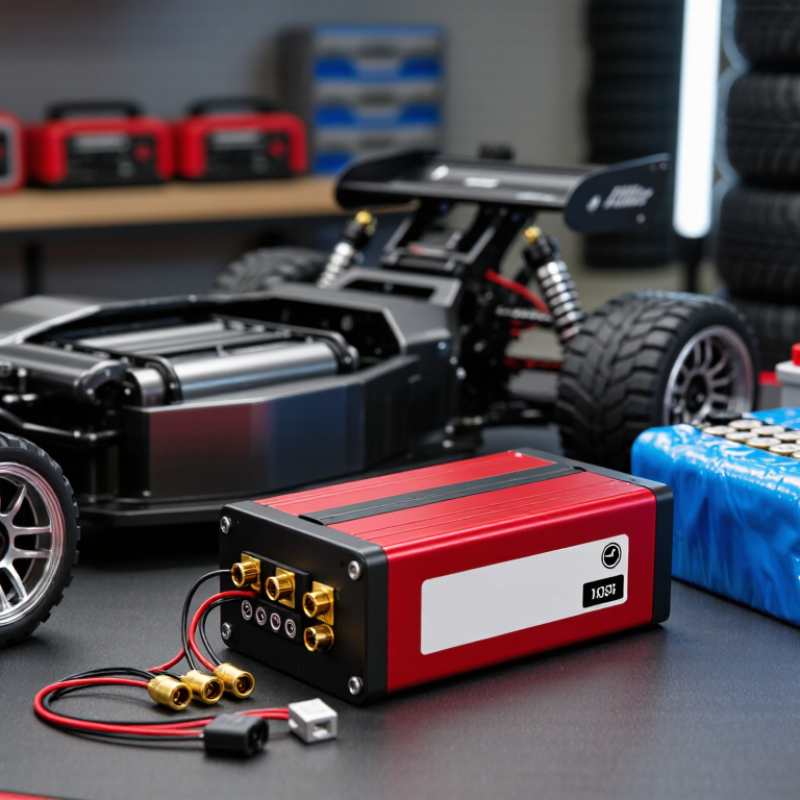
Choosing the best RC car battery starts with chemistry, not marketing. Nickel-metal hydride packs use 1.2 volts per cell, tolerate simple charging, and feel forgiving for beginners. Lithium-polymer cells provide about 3.7 volts nominally. A 2S pack therefore delivers roughly 7.4 volts. It is lighter, but it demands balanced charging and careful storage.
Capacity is measured in milliamp-hours, or mAh. A 5,000 mAh pack can theoretically supply five amps for one hour. Real driving is less predictable because acceleration, terrain, gearing, and motor efficiency change current demand. The U.S. Department of Energy links higher energy density with longer operation but also notes thermal and safety challenges in lithium-ion systems. IEA’s Global EV Outlook 2024 reported average lithium-ion pack prices near $139 per kWh in 2023, showing how rapidly this chemistry is developing.
Voltage affects speed and heat. Capacity mainly affects duration and weight. A higher C-rating may support sharp acceleration, but the printed rating is not always trustworthy. My early mistake was choosing the largest pack available. The car became heavy and handled poorly. Measure the battery bay first. Check the connector, cell count, charger settings, and discharge limits. A practical estimate is runtime in hours equals amp-hours divided by average amps, then reduce it for real-world losses. Leave room for error. Real trails are rarely gentle.
A longer run time starts with a battery your car can safely use. Check the manual for permitted chemistry, voltage, cell count, and connector type. A lithium-polymer cell is typically rated at 3.7 volts nominal and 4.2 volts when fully charged, according to Battery University’s technical reference. Match the pack’s cell count to the vehicle’s limit; extra voltage can overheat the motor or speed controller. Capacity, measured in milliamp-hours, affects run time, but a larger pack may also weigh more. That weight can make steering feel sluggish on a tight dirt track.
Check current demand, too. A pack’s stated C-rating estimates its discharge capability: capacity in amp-hours multiplied by the C-rating gives theoretical amps. For example, a 5,000 mAh pack rated at 20C calculates to 100 amps. Treat that as a rating, not a guarantee; real performance depends on temperature, pack condition, and how the rating was tested. IEC 62133-2 provides safety requirements for portable sealed lithium batteries, but it does not replace your RC car’s specifications. Measure the battery bay before buying. A pack that nearly fits may still pinch its wires.
Tips: Compare voltage, connector, dimensions, and the speed controller’s current limit. Keep some room for airflow. I have found that chasing capacity alone can backfire: a heavy pack may shorten enjoyable driving, even if it lasts longer on paper.
For extended RC run time in 2026, battery capacity matters most, but voltage and weight matter too. A 5,000 mAh pack can last longer than a 3,000 mAh pack under similar loads. However, higher capacity usually adds weight. That extra mass can increase motor demand and reduce the expected gain. It is a frustrating trade-off.
BloombergNEF reported that average lithium-ion battery prices reached 115 dollars per kWh in 2024, after a 20% annual decline. The International Energy Agency also recorded a 14% price drop in 2023. These trends support wider access to higher-capacity packs, but price should not replace technical checking. Match the pack voltage to the vehicle’s electronic system. Then confirm the connector, dimensions, and continuous discharge rating.
Choose a pack with enough current headroom, not just a large capacity number. A 5,000 mAh battery rated at 30C theoretically supports 150 amps, although real output can fall with heat, age, and voltage sag. Measure your actual run time on the same track. A cool pack after driving is a positive sign. A swollen pack is not. Storage charging and balanced charging remain essential for lithium-based packs. I would avoid choosing the heaviest battery automatically. In practice, a slightly smaller pack may deliver better handling and similar run time. The “best” option depends on gearing, terrain, driving style, and throttle habits. Expect some trial and error.
A longer RC run starts with the right charging routine, not just a larger battery. Check the battery chemistry and capacity before connecting a charger. Use the matching charge mode and set the current within the battery maker’s stated limit. For multi-cell lithium packs, use a balance lead and confirm each cell is charging evenly. Small details matter. A reversed connector or wrong setting can cause damage.
Charge on a clear, nonflammable surface, away from paper, fuel, and direct sunlight. Stay nearby and stop if the pack becomes unusually hot, puffs up, or smells odd. Never charge a visibly damaged battery. Let a warm pack cool before charging; rushing that step is tempting, but it is not worth the risk. Keep wires and connectors from touching metal tools.
Storage needs attention too. If the pack will sit unused, follow its chemistry-specific storage guidance. Many lithium-polymer packs are stored near 3.8 volts per cell, but check the pack instructions rather than treating that figure as universal. Store batteries in a cool, dry place, away from sharp objects and extreme temperatures. It is easy to forget a pack in a model after a run. Set a reminder, and inspect it before the next drive.
| Battery Type | Example Pack and Nominal Energy | Illustrative Run Time | Charging Practice | Storage and Safety | Best Fit for Long Runs |
|---|---|---|---|---|---|
| LiPo (Lithium Polymer) | 2S, 7.4 V, 5,000 mAh; approximately 37 Wh | About 11–12 minutes at a hypothetical 150 W average load, assuming roughly 80% of rated energy is usable. | Use a compatible LiPo balance charger and the charge rate specified for the pack. A common standard rate is 1C when permitted by the manufacturer. Never exceed the pack’s voltage limits. | For extended storage, use the charger’s storage mode; a typical target is about 3.8–3.85 V per cell. Charge on a non-combustible surface, supervise charging, and stop using swollen, punctured, or damaged packs. | A strong choice when the vehicle requires high power. Runtime depends on capacity, gearing, driving style, and motor demand. |
| Li-ion | 2S, 7.2 V nominal, 5,000 mAh; approximately 36 Wh | About 11–12 minutes under the same illustrative 150 W load and usable-energy assumption. Actual results depend on the pack’s discharge rating. | Use a charger specifically compatible with the pack’s cell chemistry and series count. Follow the pack’s specified charge current; do not assume a LiPo setting is suitable. | Store cool and dry at the pack maker’s recommended state of charge. Protect cells from crushing, short circuits, and heat. Do not use a pack that is damaged or unusually hot. | Can suit efficient, moderate-current setups. Check that its continuous and burst discharge ratings meet the vehicle’s needs; some Li-ion packs are not designed for high-current RC use. |
| NiMH | 6 cells, 7.2 V nominal, 5,000 mAh; approximately 36 Wh | About 11–12 minutes as a rough energy-based comparison. Voltage sag, vehicle cutoff, and pack condition can make real run time differ substantially. | Use a NiMH-compatible charger with the correct cell count and termination method, such as peak detection. Follow the pack’s recommended charge rate and avoid leaving it on an unsuitable trickle charge. | Store in a cool, dry place away from metal objects that could short the terminals. Allow the pack to cool after use or charging, and inspect wires and connectors regularly. | A practical option for compatible vehicles and users who prefer a less demanding charging routine. It may be heavier than a comparable-energy lithium pack. |
| LiFePO4 (Lithium Iron Phosphate) | 2S, 6.6 V nominal, 5,000 mAh; approximately 33 Wh | About 10–11 minutes under the same illustrative 150 W load and usable-energy assumption. Confirm that the vehicle supports the pack’s voltage. | Use a LiFe-compatible balance charger and the pack’s specified current and voltage limits. LiFe and LiPo charging profiles are not interchangeable. | Store according to the manufacturer’s guidance in a cool, dry location. Prevent short circuits and physical damage; discontinue use if the pack is swollen, leaking, or otherwise damaged. | Worth considering when the vehicle and charger explicitly support LiFe packs. Its lower nominal voltage may affect speed and compatibility. |
| How to estimate run time | Approximate run time in hours = usable battery energy in watt-hours ÷ average vehicle power in watts. For example, 37 Wh × 0.8 ÷ 150 W ≈ 0.20 hours, or about 12 minutes. | This is an estimate, not a guarantee. Acceleration, terrain, tires, gearing, temperature, battery age, ESC cutoff, and driving style all affect actual run time. Use only a battery voltage and connector arrangement approved for the vehicle. | |||
| General safety checklist | Use a charger matched to the battery chemistry and cell count. Do not charge unattended or near flammable materials. Check packs, leads, and connectors before use; prevent short circuits; and follow the battery and vehicle manufacturers’ instructions for charging, storage, and disposal. | ||||
2026 Best RC Car Battery for Long Run Time?
How to Compare Battery Life, Performance, Cost, and Durability
A battery’s capacity, measured in milliamp-hours, offers a useful starting point, but it does not guarantee longer runs. Motor load, driving style, terrain, and temperature all affect runtime. Compare batteries in the same car, on the same track, using similar throttle patterns. Record minutes driven and remaining charge. Small details matter.
Performance depends on more than capacity. Check that voltage matches the vehicle’s requirements, and consider whether the battery can deliver enough current under acceleration. A pack that feels powerful on straight sections may sag during repeated starts. Numbers help, but actual driving tells more.
Cost makes more sense when measured across usable runs, not just at checkout. A slightly pricier battery may be better value if it retains capacity after many charge cycles. Durability also counts: inspect the casing, wires, and connectors for wear after use. I would not trust one test alone; my own comparisons can be inconsistent, especially when track conditions change. Keep notes, and let repeated results guide the choice.